Storyville
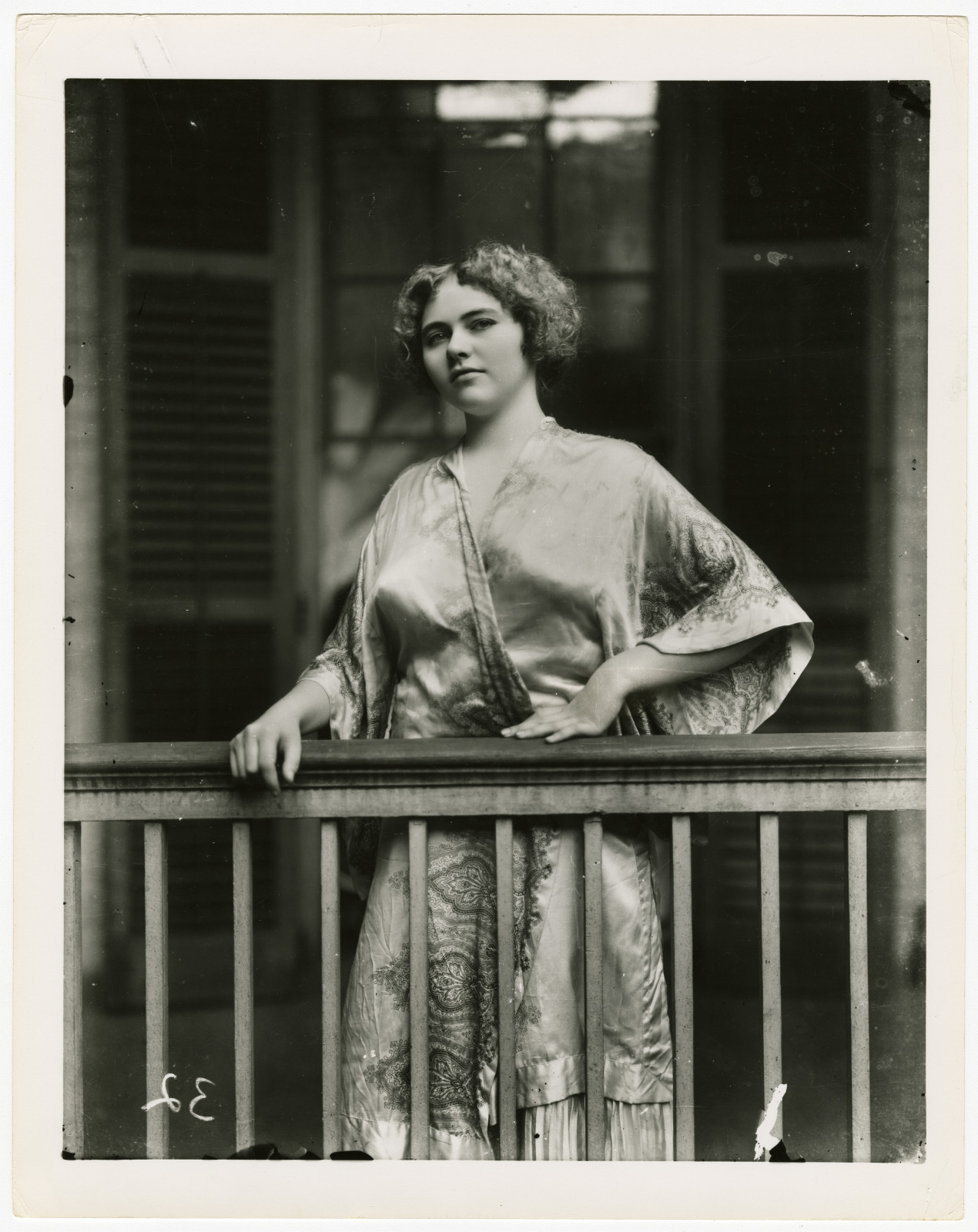
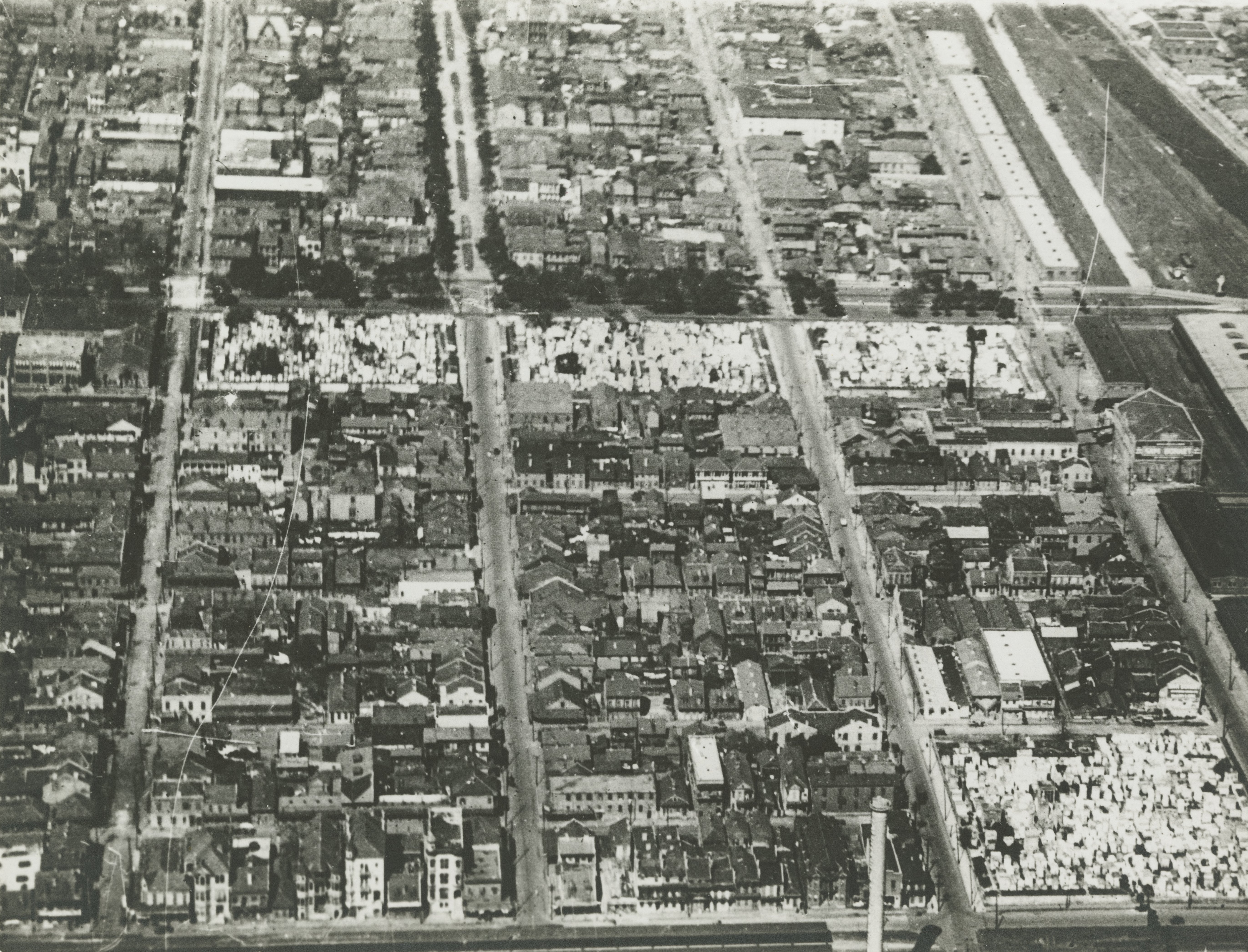
Storyville was New Orleans’ infamous red light district, established in 1897 and dissolved in 1917, which was integral to the development of jazz. Its name mockingly referred to city alderman Sidney Story, a reformer who sought to contain and isolate the vice trade in the city, but whose namesake district wound up making it a spectacle.
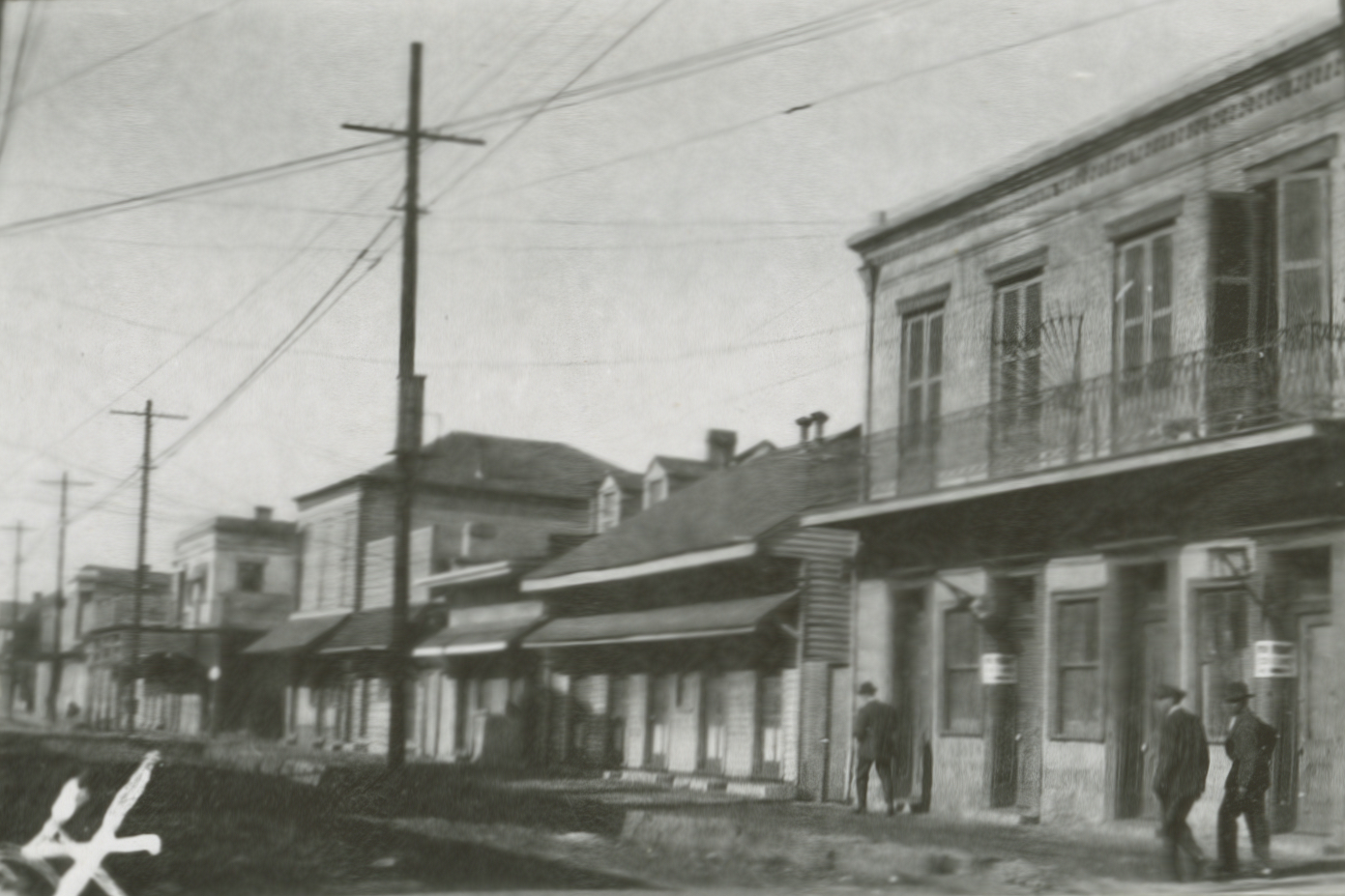
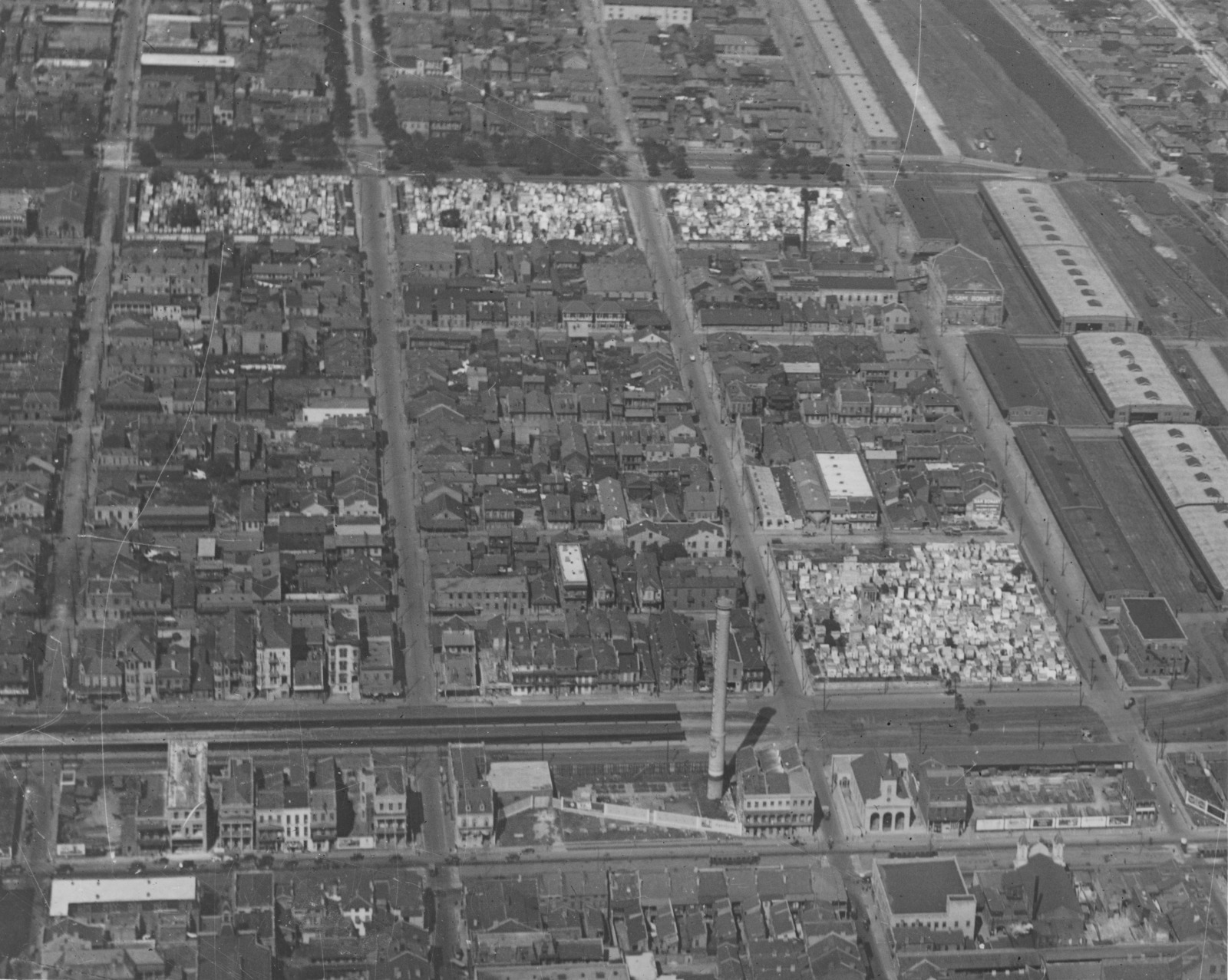
The city drew the boundaries of Storyville around a preexisting entertainment district on Franklin (now Crozat) Street. This stretch of the Fourth Ward was full of dance halls, saloons, gambling dens, and houses of ill repute. The clientele of these businesses matched the demographics of the surrounding neighborhood: working class and predominantly Black, with a significant minority of European immigrants.
Black dance bands continued to perform in these venues as property owners transformed the residences and institutions around them into brothels and other businesses designed to separate white men from their money.
Clarinetist “Big Eye” Louis Nelson Delisle recalled:
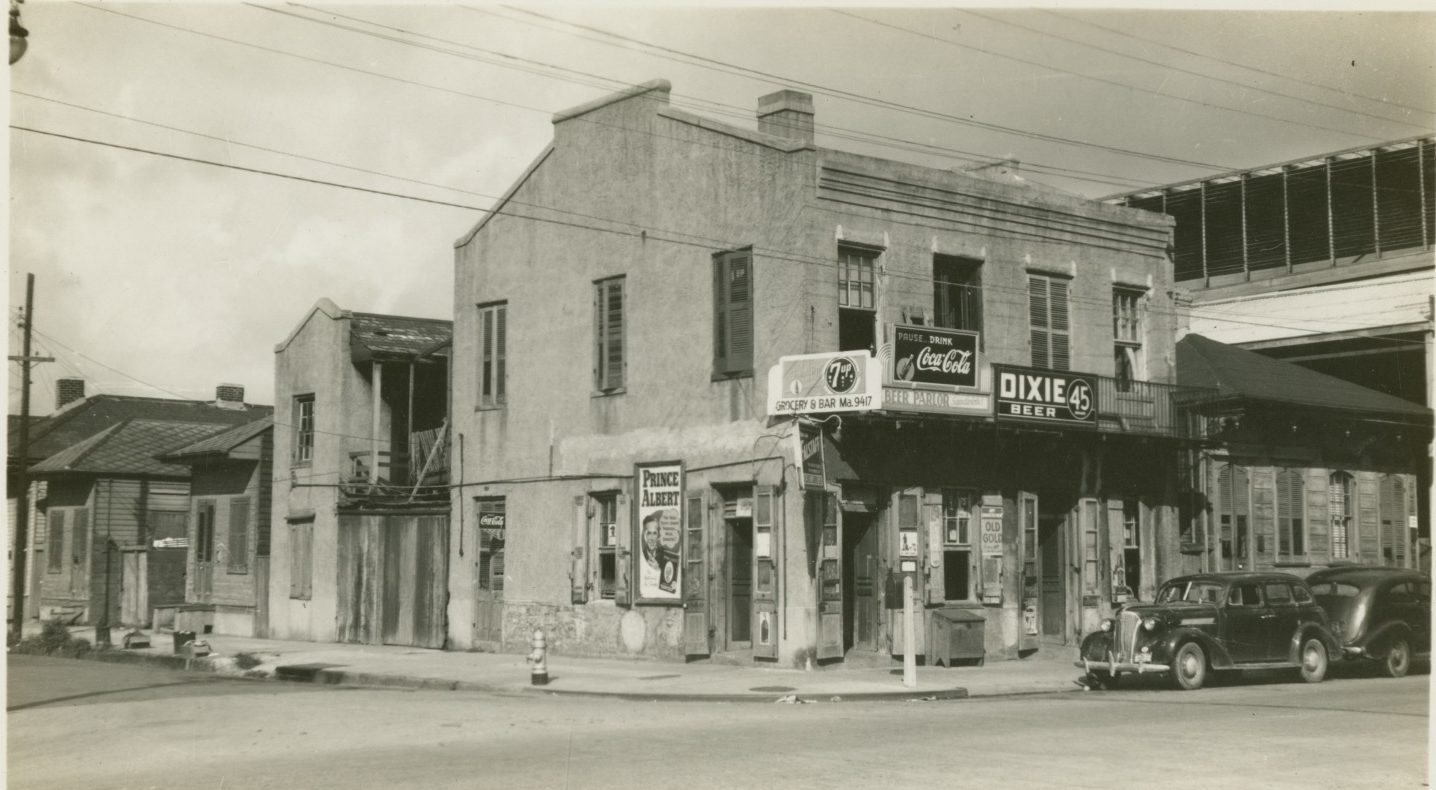
The sporting district come to have all the best musicians because the pay was every night. Just take the corner of Iberville and Franklin—four saloons on the four corners—the Big 25’s, 28, Pig Ankle, and Shoto’s. Those places had eight bands amongst them. Four on day and four on night. And they changes bands like you change underclothes.
In the district’s first, booming decade, dance bands tended to be relatively small—four or five pieces, often heavy on strings. Their repertoire catered to the audience, with songs appropriate for the dances of the day, from formal waltzes to slow dragging blues.
At higher-end bordellos, concentrated in the 200 and 300 blocks of Basin Street, madams hired solo pianists, called professors, to entertain customers in luxurious parlors before they adjourned to a room. Hilma Burt, for example, had a young Jelly Roll Morton perform in her famous mirrored ballroom.
The musicians in Storyville were mostly, but not exclusively, men. Mamie Desdunes, a formative influence on Morton, played piano in the district, and Madam Antonia Gonzales was a cornetist. Some sex workers in upscale brothels sang and played music as part of their appeal to customers.
During the district’s second decade, dance bands led by the likes of Freddie Keppard and Joe Oliver incorporated more brass instruments, and kept up-to-date with new dances of the ragtime era, like the turkey trot. The term “jazz” wasn’t yet in common use, but these larger bands had created a new style of dance music.
While dance floors heated up, the sex trade in the district cooled somewhat. A deadly shootout at the Tuxedo Dance Hall in 1913 temporarily shut down every hall in Storyville, and led to years of raids and restrictions on performance venues. In 1917, with World War I raging, the federal government pressured the city to shut down Storyville so as not to corrupt soldiers passing through New Orleans.
Around the same time, many musicians from New Orleans relocated to major cities around the country. Most famously, Louis Armstrong followed his mentor Joe Oliver to Chicago, and then became a star in New York. The advent of recorded music helped spread jazz to the mainstream.
Meanwhile, by 1940 most of what had been Storyville was leveled as part of a “slum clearance” project, and a misleading historical narrative was taking root. In the popular imagination, exemplified in the 1947 movie “New Orleans,” the district was the “birthplace of jazz,” and its closure created an exodus of musicians who took jazz to the masses.
While this mythology persists in various forms today, scholars have since established that jazz developed across New Orleans in the early 1900s, and the larger forces of the Great Migration, not the closure of Storyville, were behind much of its early exponents’ departure from the city. Still, the district’s piano parlors and dance halls were an important part of the story.
Sources of information about music in Storyville
Among the richest sources of information about music in Storyville are first-person accounts from the musicians who worked there. Jelly Roll Morton’s is particularly detailed and accessible, as he discusses the district in his Library of Congress recordings, which are online, and serve as the basis of the book Mister Jelly Roll by Alan Lomax.
The classic book Hear Me Talkin’ To Ya includes a fair bit of material about Storyville, as does The Autobiography of Pops Foster.
Buddy Bolden and the Last Days of Storyville, a posthumous volume by Danny Barker, is not a history, but “a folklore promulgated by the musicians that Danny himself knew and played with,” as editor Alyn Shipton put it.
By far the largest collection of audio recordings and transcripts of oral histories with individual musicians who played in Storyville is housed at the Hogan Archive of New Orleans Music and New Orleans Jazz at Tulane University. Significant portions of this repository are available online, through Tulane and the affiliated Music Rising program.
The Historic New Orleans Collection’s online catalogue also includes a wealth of information on the district, such as an extensive multi-part oral history with Manuel Manetta, a multi-instrumentalist and bandleader who was a fixture there.
Some scholarly books that go deep on particular New Orleans musicians include valuable looks at the district, such as Louis Armstrong’s New Orleans by Thomas Brothers, Pioneers of Jazz: The Story of the Creole Band by Lawrence Gushee, and Creole Trombone: Kid Ory and the Early Years of Jazz by John McCusker. Writing for a wider audience, Gary Krist’s Empire of Sin still includes thorough endnotes.
The book Storyville, New Orleans: Being an Authentic, Illustrated Account of the Notorious Red-Light District by Al Rose includes both a substantial amount of vital information and a significant number of false and unverifiable claims (the book has no citations).
More recent work on provide broader and more rigorous treatments of the district.
In Guidebooks to Sin: The Blue Books of Storyville, New Orleans, Pamela D. Arceneaux conducts a close reading of the various guides published for Storyville’s customers.
There are also two excellent academic books that delve into the district, The Great Southern Babylon: Sex, Race and Respectability in New Orleans, 1865-1920 by Alecia P. Long and Spectacular Wickedness: Sex, Race, and Memory in Storyville, New Orleans by Emily Epstein Landau. As their subtitles suggest, neither prioritizes music, but both are essential for understanding the larger social forces that shaped Storyville.
Long has pointed out that earlier publications on the district focusing on its musical legacy tend to marginalize the women whose labor defined the place, and whose points of view were largely excluded from the archival record. As a music history project, A Closer Walk is inescapably complicit in that dynamic, but we encourage everyone to seek out Long and Landau’s work.
Videos
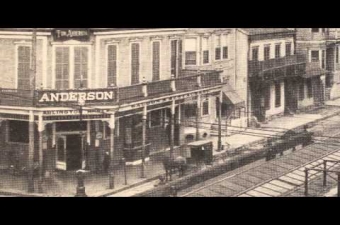
A five-minute primer on Storyville with Dr. Alecia Long, author of the essential book The Great Southern Babylon: Sex, Race, and Respectability in New Orleans 1865-1920.
Video posted by NOLA.com.
A five-minute primer on Storyville with Dr. Alecia Long, author of the essential book The Great Southern Babylon: Sex, Race, and Respectability in New Orleans 1865-1920.
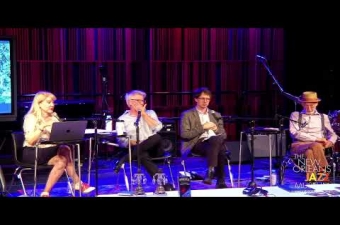
Panel discussion on Storyville with John McCusker, Claus Sadlier, Eric Seiferth, and Sally Asher from the New Orleans Jazz Museum in 2025.
Video posted by NOLA Jazz Museum.
Panel discussion on Storyville with John McCusker, Claus Sadlier, Eric Seiferth, and Sally Asher from the New Orleans Jazz Museum in 2025.
Images