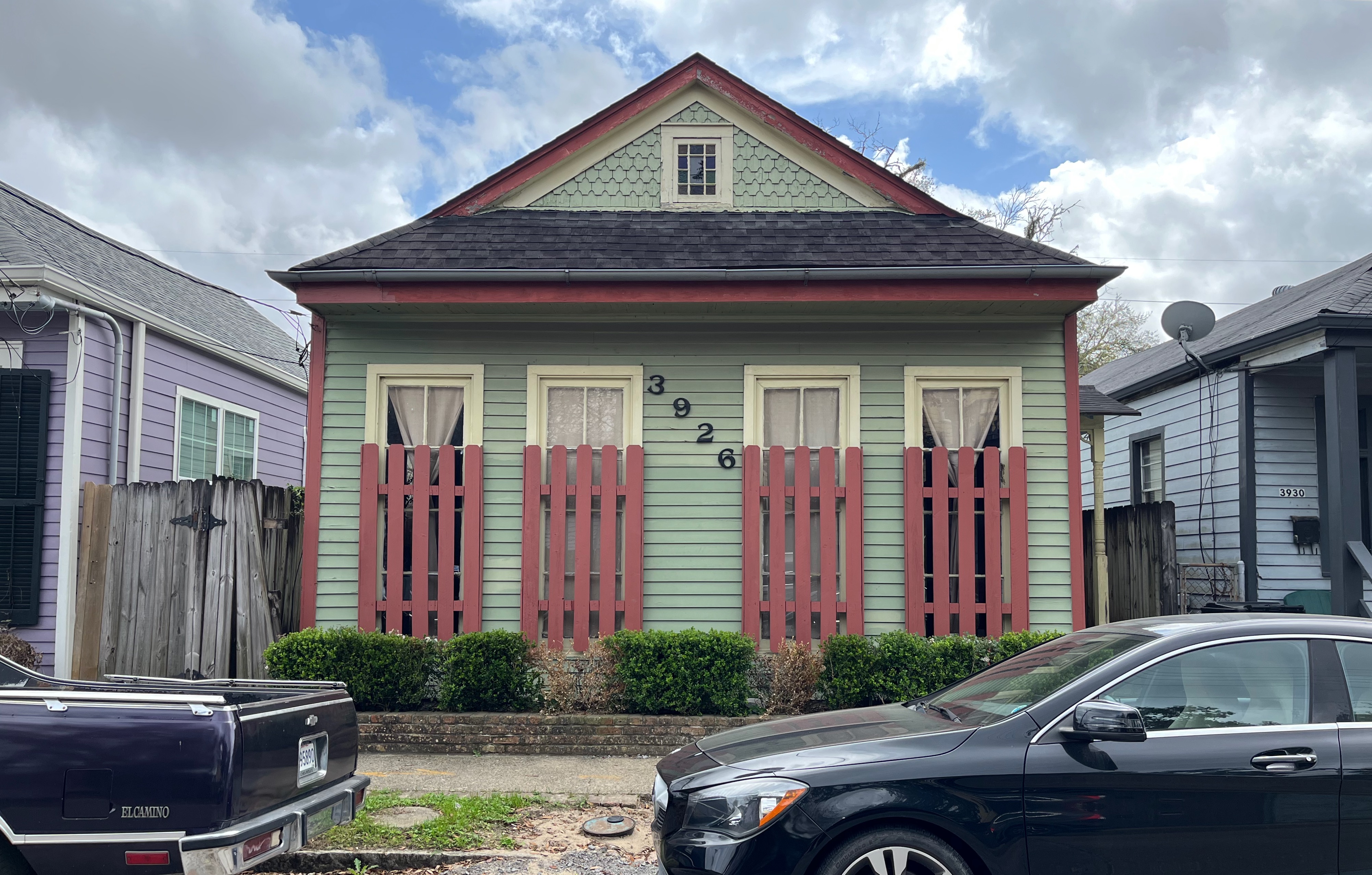
Tony Jackson’s House
3928 Laurel StreetNew Orleans LA 70115
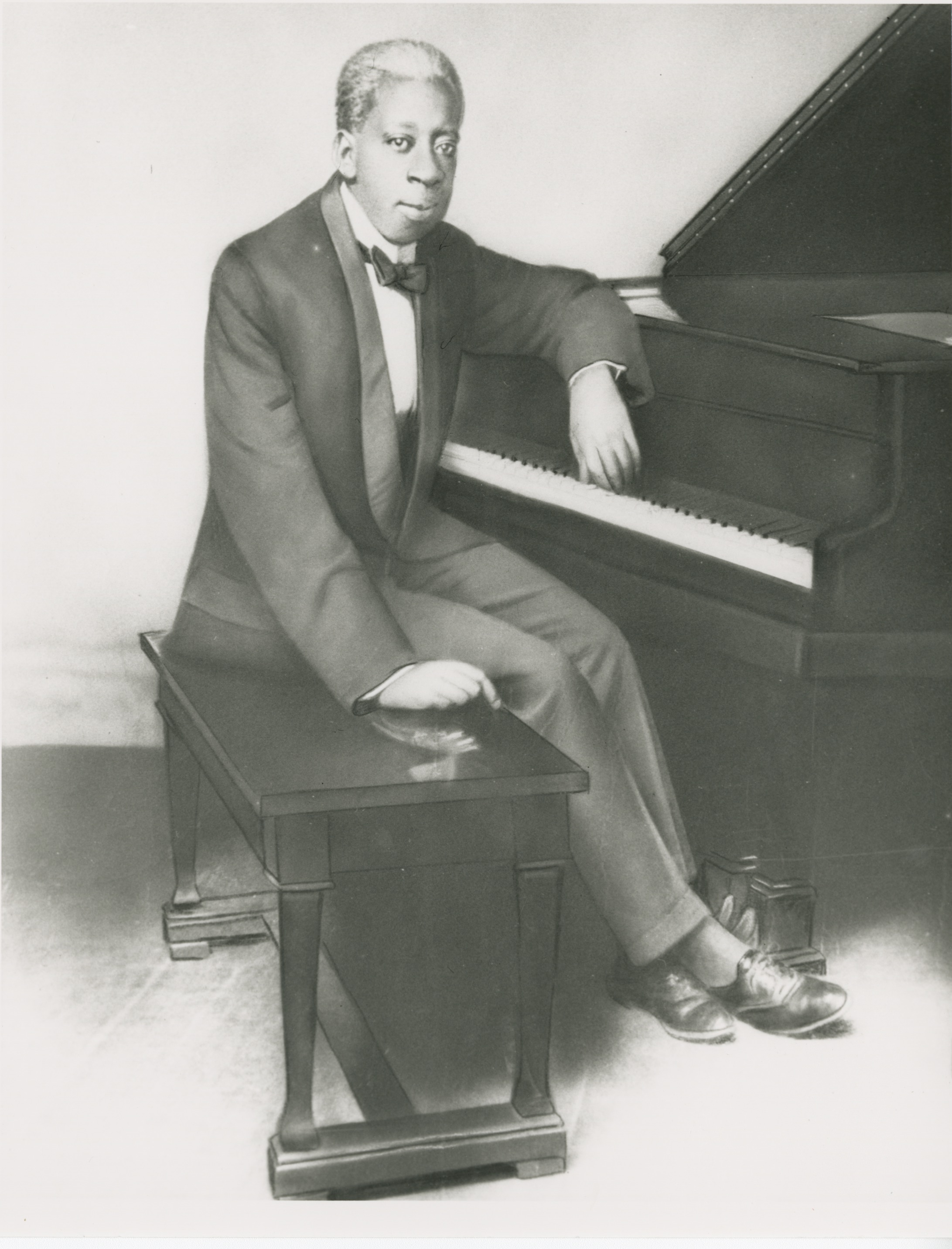
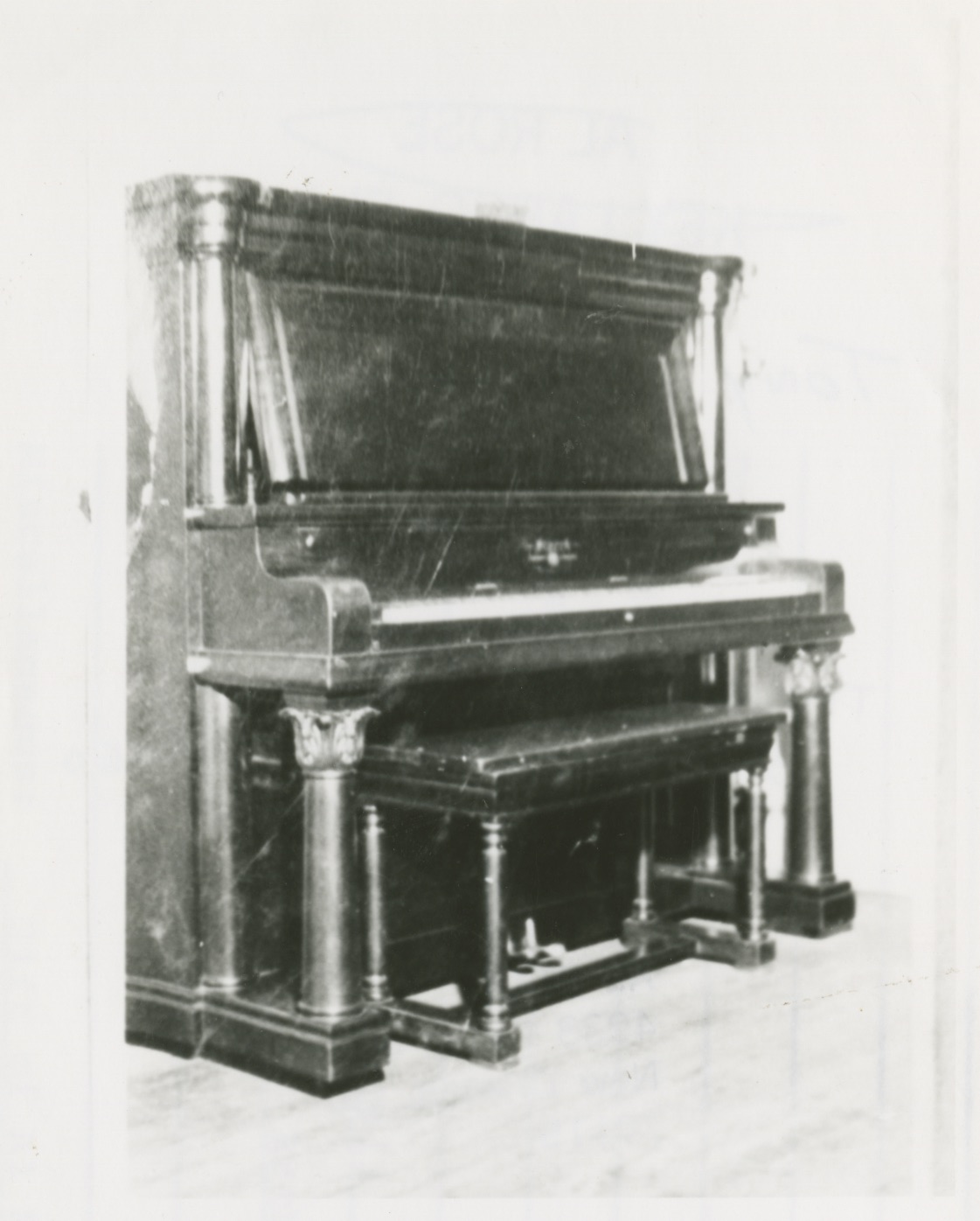
Tony Jackson (1882 – 1921) was a virtuoso pianist, singer, and songwriter integral to the development of jazz. A guiding light to Jelly Roll Morton and other jazz pioneers, Jackson was a fixture in Storyville, New Orleans’ legendary vice district. He is best known today as the composer of the standard “Pretty Baby,” the namesake of the controversial film set in Storyville starring an 11-year-old Brooke Shields.
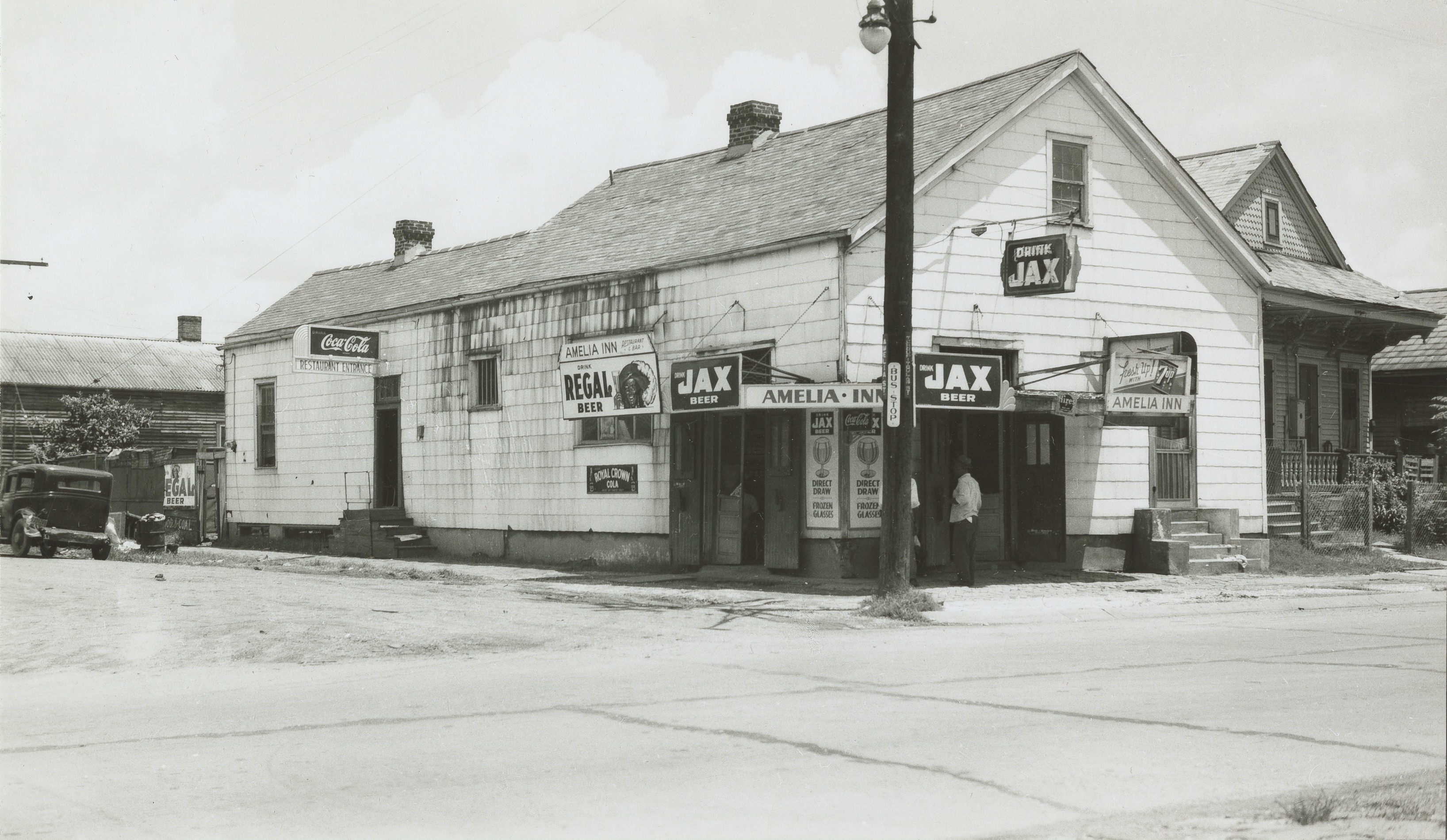
The 1910 census found Jackson residing on the right side of this house (it used to be a double) with his parents, two sisters, and a roomer. His modest home life contrasted with his spectacular performances, which were admired by fellow artists.
“Tony was considered among all who knew him the greatest single-handed entertainer in the world,” Morton said.
Jackson never recorded, so his reputation rests largely on the effusive testimony of his peers. Morton, for one, was generally eager to elevate his own status, but acknowledged that Jackson was in a class by himself. Considering the city’s top pianists in the early 1900s, he said:
All these men were hard to beat, but when Tony Jackson walked in, any one of them would get up from the piano stool. If he didn’t, somebody was liable to say, ‘Get up from that piano. You hurting its feelings. Let Tony play.’ Tony was real dark and not a bit good-looking but he had a beautiful disposition….
Clarence Williams, the acclaimed pianist, composer, and music publisher, agreed: “Everybody followed the great Tony Jackson,” he said. “He was so original and a great instrumentalist. I know I copied Tony.”
Jackson was not held in the same esteem outside of the music world, however, because he was Black and openly gay.
On stage, Jackson was known to sing both the “male” and “female” parts in a duet, and to insert his own bawdy lyrics into popular tunes of the day. At once playful and bold, he asserted his identity ways that anticipated later Black LGBTQ artists in New Orleans, such as Patsy Vidalia, the “female impersonator” emcee at the Dew Drop Inn, and “sissy bounce” rappers like Big Freedia (Jelly Roll Morton said of Jackson, “a lot of people call him a lady or sissy… But he was very good and very much admired”).
A young phenom surrounded by music
According to jazz historian John McCusker, Jackson “was the son of formerly enslaved parents.” His father, also called Tony Jackson, worked on the river, and once saved the life of a man who fell in the water. His mother, Rachel, earned money washing clothes, and had three children before giving birth to Tony and his twin, Prince Albert, in 1882.
Prince Albert Jackson died as a toddler, and some secondary sources say that Jackson himself was sickly throughout his life—author Al Rose wrote that he was epileptic. This is plausible—Jackson died young, and the few photos we have of him show a heaviness about eyes—but the source of this diagnosis is unclear.
Similarly, Rose lacks a citation for his account of Jackson’s first instrument: “he contrived, at the age of seven, a mammoth, ludicrous contraption, much like a crude oversized harpsichord, which he could tune and play.” Versions of this and other unsubstantiated claims permeate writing about Jackson online and off.
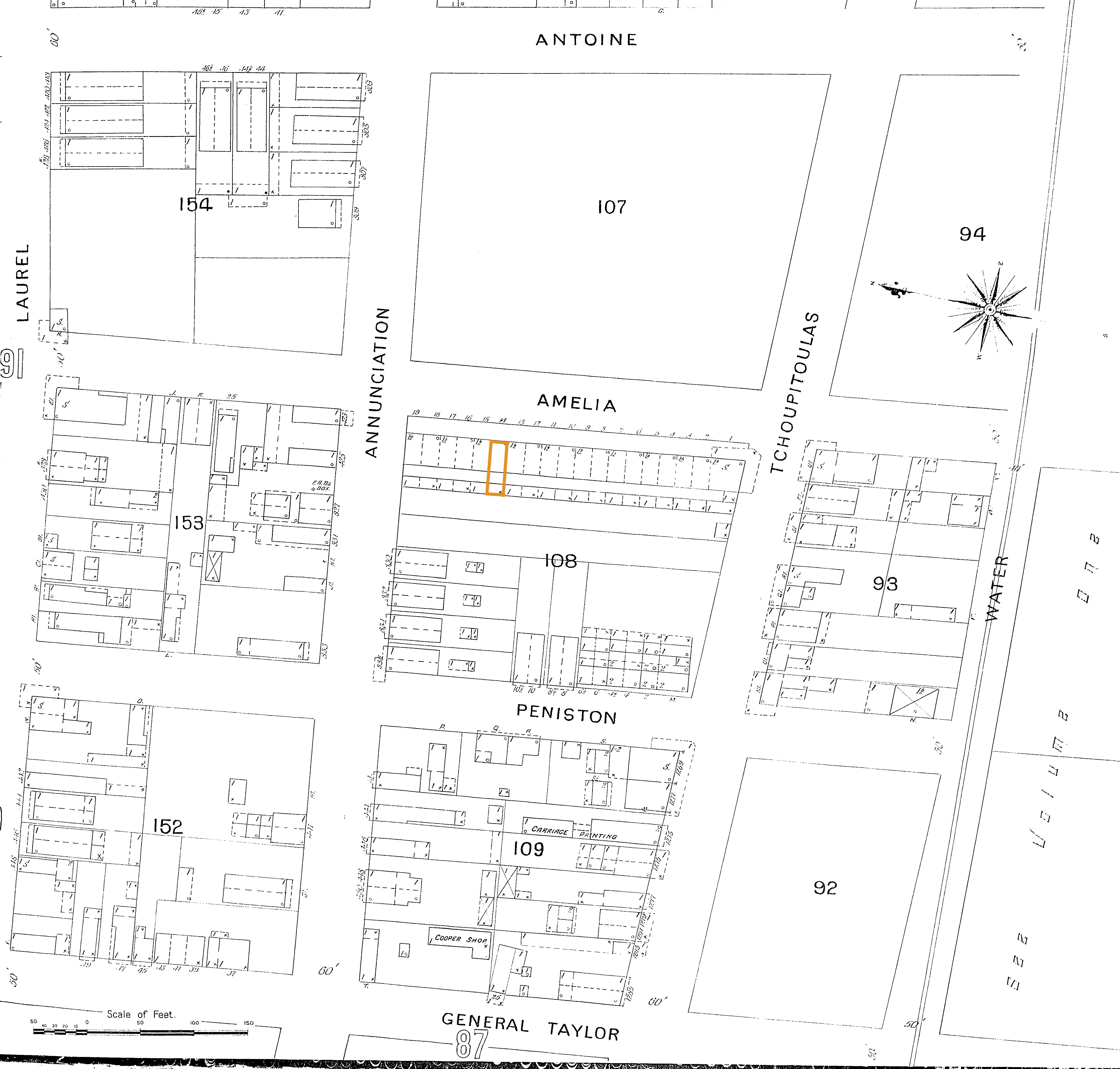
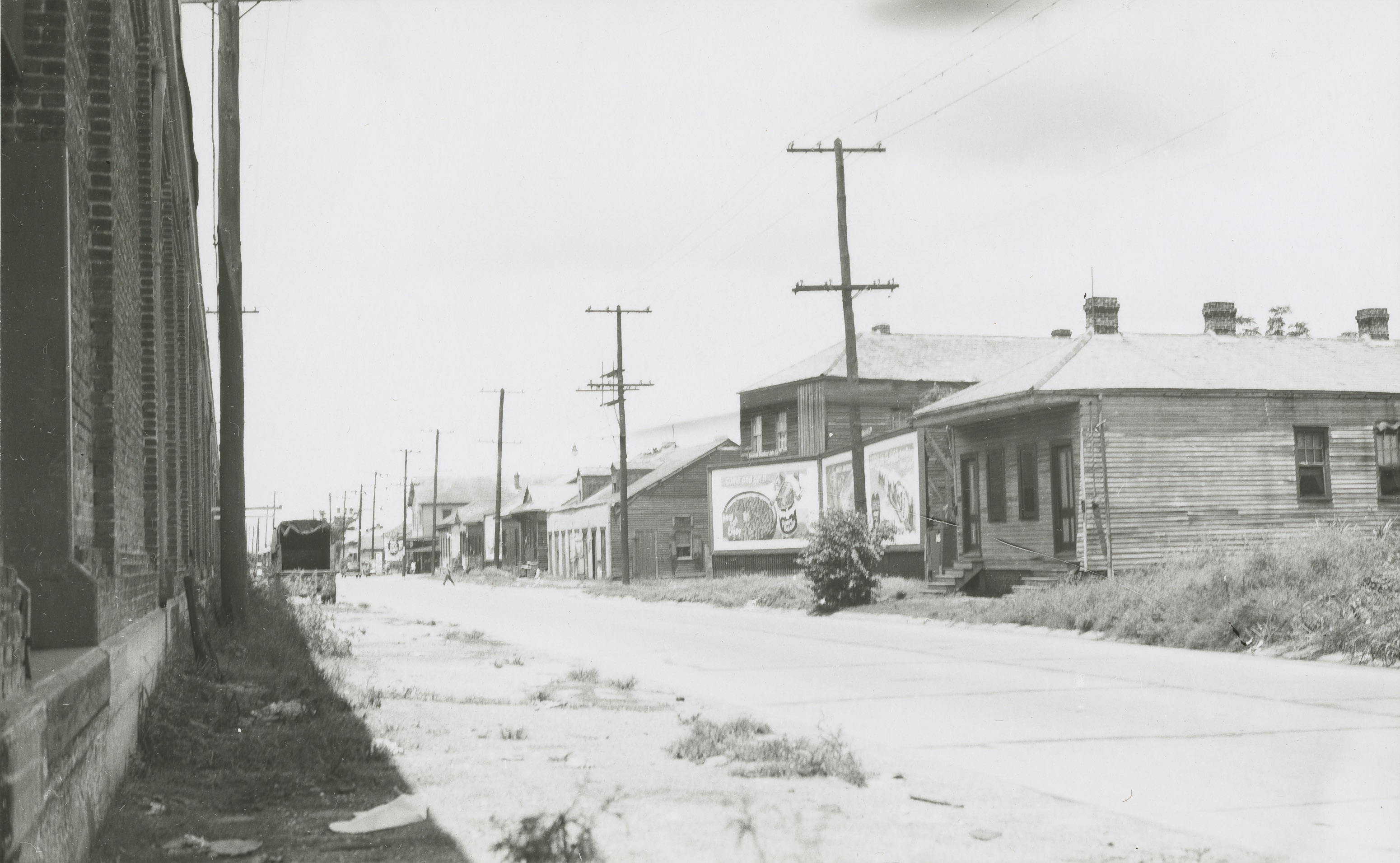
Jackson grew up in the 12th Ward on Amelia Street, between Tchoupitoulas and Annunciation. The 1894 City Directory shows the Jackson family two doors down from bandleader Adam Oleavia, who, according to trumpeter Bunk Johnson, ran a honky tonk at the end of the block for some time around 1900.
Johnson, who grew up in the nearby 13th Ward and played in Oleavia’s band, recalled that Jackson “started playing piano by ear in Adam Olivier’s [sic] tonk on the corner of Amelia and Tchoupitoulas.” Early jazz enthusiast Roy J. Carew, who knew Jackson in adulthood, told a complementary story him:
I asked him one night who taught him to play the piano, and he straightened up and said ‘I taught myself,’ and I could see that he was proud of the fact. Clearly Tony Jackson was one of those musicians with great natural talent, who constantly reach out to add to what they know…
Indeed, Jackson was a prodigy. While still in school he joined Oleavia’s group, which played orchestrations from sheet music. At least one of their gigs was a short commute: author Lynn Abbott wrote that Oleavia’s band played for “lawn parties” directly behind his and the Jacksons’ homes. A map from the period shows a strip of empty land running down the center of the 700 block of Amelia Street. Abbott wrote that it functioned as a park, with “a bandstand and an area paved for dancing.”
Author Rudi Blesh, who counted Carew and two of Jackson’s sisters among his sources, wrote:
By the time [Jackson] finished his schooling in New Orleans College, at St. Charles and Soniat, he was already a natural singer and pianist and disinclined to follow of profession or a trade or take holy orders, a step in which his devout family would have concurred. Instead, by his early teens he was playing in the honkytonks along with [Albert] Carroll and [Alfred] Wilson, his ragtime style already formed along New Orleans lines.
Blesh also ventured a description of Jackson’s sound:
Tony’s piano style had the utmost variety of ragtime, and included the ‘single walking bass’ and ‘double walking bass’ of broken octaves that have since come to be associated with the boogie-woogie style. His fast fingering was spellbinding, but the slower tempos of his slow drags and blues rocked with rhythm, too. His ballad accompaniments were famous, and his harmonic sense was as highly developed and as personal as that of [Louis] Chauvin. Tony’s singing voice featured extraordinary range and was topped off by a controlled falsetto that he used for comedy.
Jelly Roll Morton also marveled at Jackson’s versatility:
His memory seemed like something nobody’s ever heard of in the music world. There was no tune that would ever come up from any opera, from any show of any kind or anything that was wrote on any paper that Tony couldn’t play from memory. He had such a beautiful voice and a marvelous range. His voice on an opera tune was exactly as an opera singer. His range on a blues would be just exactly like a blues singer.
At 18, in 1900, Jackson lived with his family at 3920 Magazine Street, a few blocks from his childhood home on Amelia, and was already making a name for himself as a pianist and entertainer.
In 1904 he toured with the Whitman Sisters on the Black vaudeville circuit, but seemed not to take to life on the road. Fortunately, there was plenty of work for him back home, where the red-light district downtown was booming.
Piano Professor in Storyville
The city drew the boundaries of Storyville in 1897, decriminalizing sex work with its borders beginning in 1898. The district’s highest-profile attractions were a gauntlet of luxurious bordellos on and around Basin Street. These typically included piano parlors, where customers drank and kibbitzed with the women of the house before adjourning to a room.
Jackson became the archetypal piano “professor” in these houses, dressed to the nines, and showing the skills and capacious memory to play just about any song requested of him. Sex workers and their customers also rewarded Jackson for his penchant to insert sexual lyrics in his renditions of popular tunes. He raked in enough tips at these gigs to accent his suits with jewelry, though his most distinctive accessory was a tuft a prematurely gray hair.
He composed originals, too. Bunk Johnson said that, at Willie Piazza’s famous brothel, Jackson “made a big hit with his song, ‘I’ve got Elgin Movements in My Hips with Twenty Years Guarantee.’”
Morton recalled another specialty of Jackson’s at the house run by madam Gipsy Shaffer (whose name was recorded with various spellings):
Walk into Gypsy Schaeffer’s and, right away, the bell would ring upstairs and all the girls would walk into the parlor, dressed in their fine evening gowns and ask the customer if he would care to drink wine. They would call for the ‘professor’ and, while champagne was being served all around, Tony would play a couple numbers. If a naked dance was desired, Tony would dig up one of his fast speed tunes and one of the girls would dance on a little narrow stage, completely nude. Yes, they danced absolutely stripped, but in New Orleans the naked dance was a real art.
Carew remembered being transfixed by Jackson’s playing, which he heard one night outside of a brothel run by Antonia P. Gonzales (who promoted herself as “the only Singer of Opera and Female Cornetist in the Tenderloin”). Carew wrote in The Record Changer magazine:
It was the most remarkable playing and singing I had ever heard; the songs were just some of the popular songs of the day and time, but the beat of the bass and the embellished treble of the piano told me at once that here was something new to me in playing. And the singing was just as distinctive. It was a man’s voice of very good quality which rang true on every tone; a vibrant voice that took each note with easy precision; a happy voice that had at times a sort of wild earnestness to it. High notes, low notes, fast or slow, the singer executed them all perfectly, blending them into a perfect performance with the remarkable piano style.
A little later, perhaps around 1911, based on Carew’s recollection of an Irving Berlin song published that year, Jackson held a gig at a saloon in the district now known as Frank Early’s. Refined as Jackson was (Johnson called him “dicty”), the job brought him into a rowdy scene on Franklin Street—three of the establishment’s proprietors between 1906 and 1914 would be arrested for murder.
Transition to Chicago and premature death
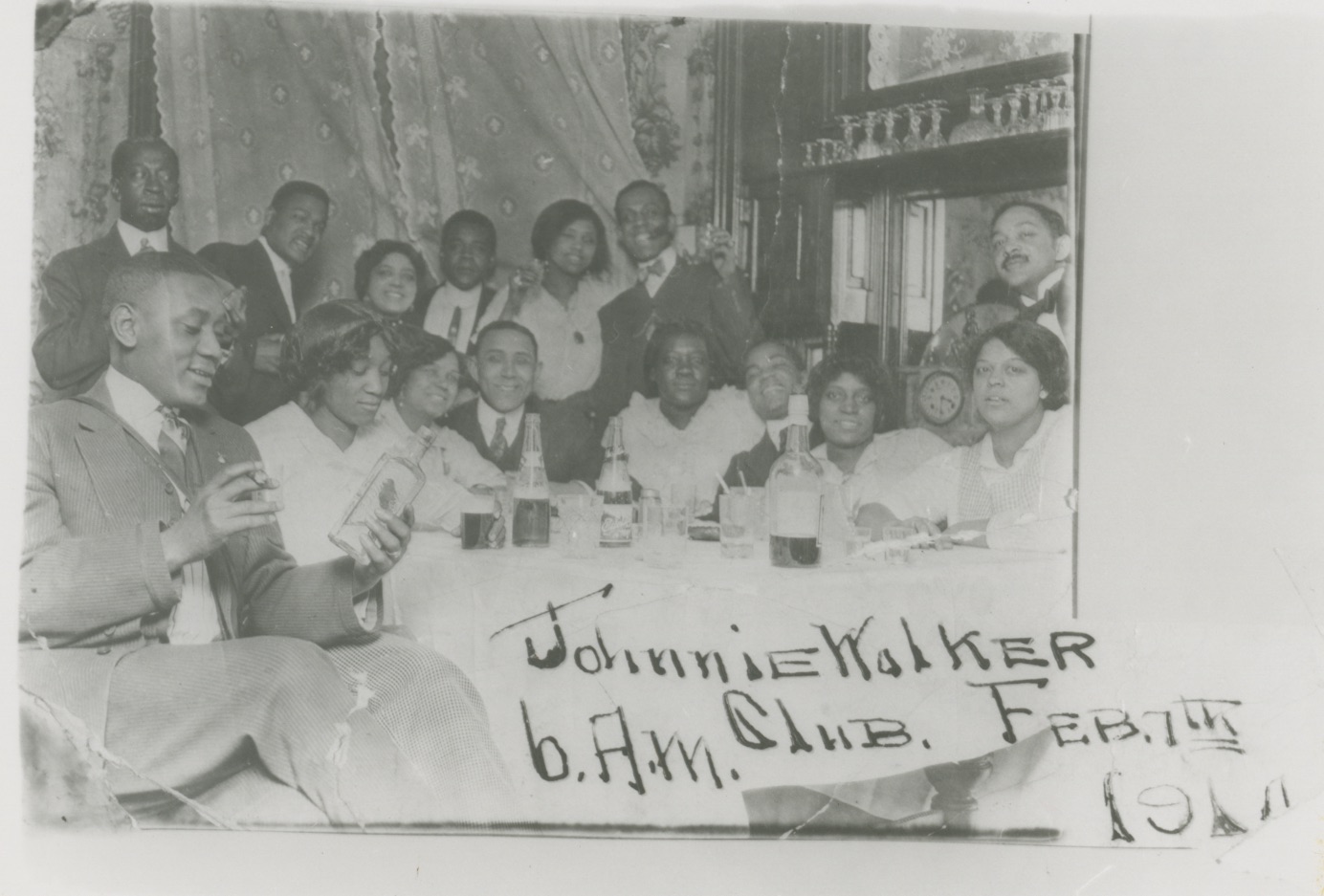
It’s not clear why Jackson went from relatively cushy parlor gigs to a corner saloon. From a photo of Jackson in Chicago dated February 1910, we can surmise that he was already spending time up North at this point, so perhaps the residency at Early’s was a matter of convenience.
The fact that the census found Jackson in the 12th Ward with his family later in 1910, and that reports vary about the timing of his relocation to Chicago, suggest that he may have moved back and forth between the two cities for a time before settling permanently on the South Side. As with other Black workers joining the Great Migration, Jackson likely experienced a combination of pushes from the South and pulls to the North.
His gig at Early’s, where, according to Carew, he had to play a piano with a sticky key, probably wasn’t as lucrative as the theater job he’d land in Chicago.
Then there were the social pressures. While Jackson found a measure of acceptance of his sexuality among fellow entertainers in New Orleans, he lived in the neighborhood he grew up in, with his religiously observant parents, into his 20s. It’s easy to imagine Chicago offering him the relief of being able to go out without running into anyone who knew him.
And racial discrimination in New Orleans was unrelenting. The Robert Charles riots threatened Black workers in Storyville in 1900. In 1903, Jackson was one of dozens of Black people swept up in a mass arrest for “general disturbance of the peace” at the Odd Fellows and Masonic Hall, a regular venue for Buddy Bolden and John Robichaux’s bands. He was picked up for “disturbing the peace” on South Rampart Street again in 1907. In 1908 the state mandated segregation at saloons like Early’s.
Though Jackson’s talent won over white and black audiences alike, and he had the education and comportment of the most respectable elements of society, he was subject to countless indignities at home.
By 1913 the Chicago Defender characterized Jackson as a “favorite” pianist in the city, in the summer of 1914 the paper mentioned him frequently regularly.
In 1916 when he decided to publish “Pretty Baby,” a song he’d written years earlier. It was a hit, soon performed on Broadway and later recorded by artists from Bing Crosby to Brenda Lee.
Jackson won an ardent following as a live performer in Chicago, including at an after-hours gig with fellow New Orleans expatriate Sidney Bechet—the two masters performed as a duo at the Pekin Theatre. Bechet said that Jackson didn’t need him to entertain the crowd, which included a number of other performers.
By 1920, two of Jackson’s sisters had moved in with him. They squeezed into an apartment on the South Side along with Jackson’s brother-in-law, two nieces, a nephew, and five other boarders.
Jackson’s health took a bad turn in the winter of 1921. In February, his fellow entertainers, including New Orleanian Joe Oliver, organized a benefit concert for him at the storied Dreamland Café. Billboard wrote that the “All Star Tony Jackson Testimonial…was one of the greatest programs ever arranged, in which the leading cabaret and vaudeville stars, as well as several boxers and wrestlers, participated.”
David Butters reported that Rose and Dr. Edmond Souchon found Jackson’s death certificate, which showed that he died on April 20, 1921 from cirrhosis of the liver. Associates going back to his New Orleans days noted that Jackson drank heavily, and Morton felt that “the poor fellow drank himself to death.”
Despite his untimely death, Jackson’s legacy has garnered increasing public attention recently, particularly by historians of LGBTQ performance.
Videos

Jelly Roll Morton's discussion of Tony Jackson and renditions of some of Jackson's material from Morton's Library of Congress Recordings.
Posted by ItsRemco.
Jelly Roll Morton's discussion of Tony Jackson and renditions of some of Jackson's material from Morton's Library of Congress Recordings.
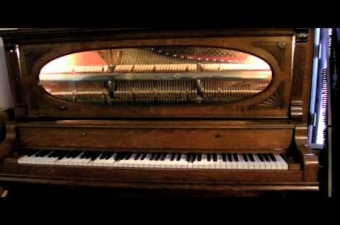
Piano roll of the Tony Jackson composition, "I'm Cert'ny Gonna See 'bout That."
Video posted by Adam Swanson.
Piano roll of the Tony Jackson composition, "I'm Cert'ny Gonna See 'bout That."

Piano roll of the Tony Jackson composition "Ice and Snow (or Don't Leave Me in the Ice and Snow)."
Posted by Paul Manganaro.
Piano roll of the Tony Jackson composition "Ice and Snow (or Don't Leave Me in the Ice and Snow)."
Images