Frank Early’s Saloon
1216 Bienville St.New Orleans LA 70112
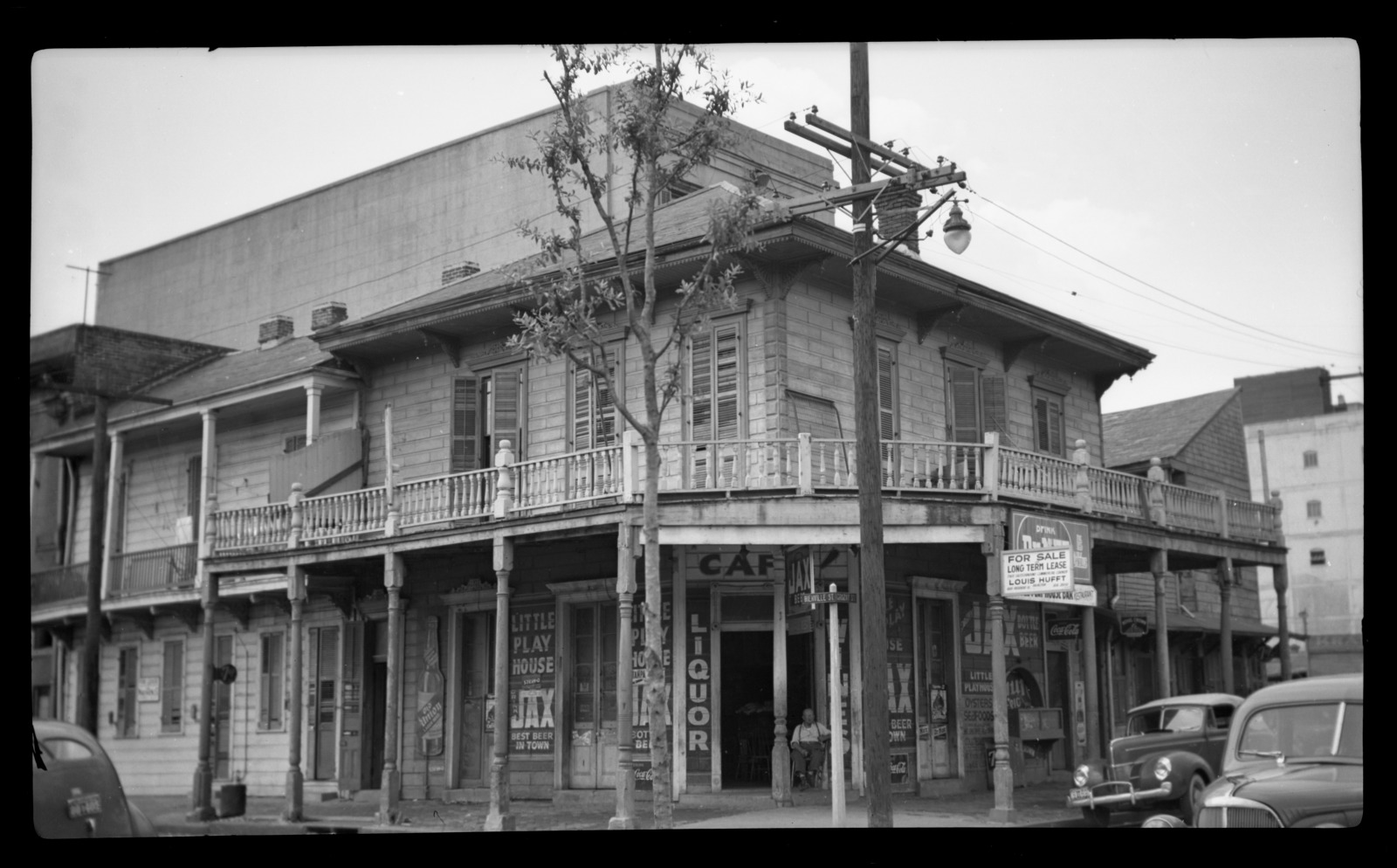
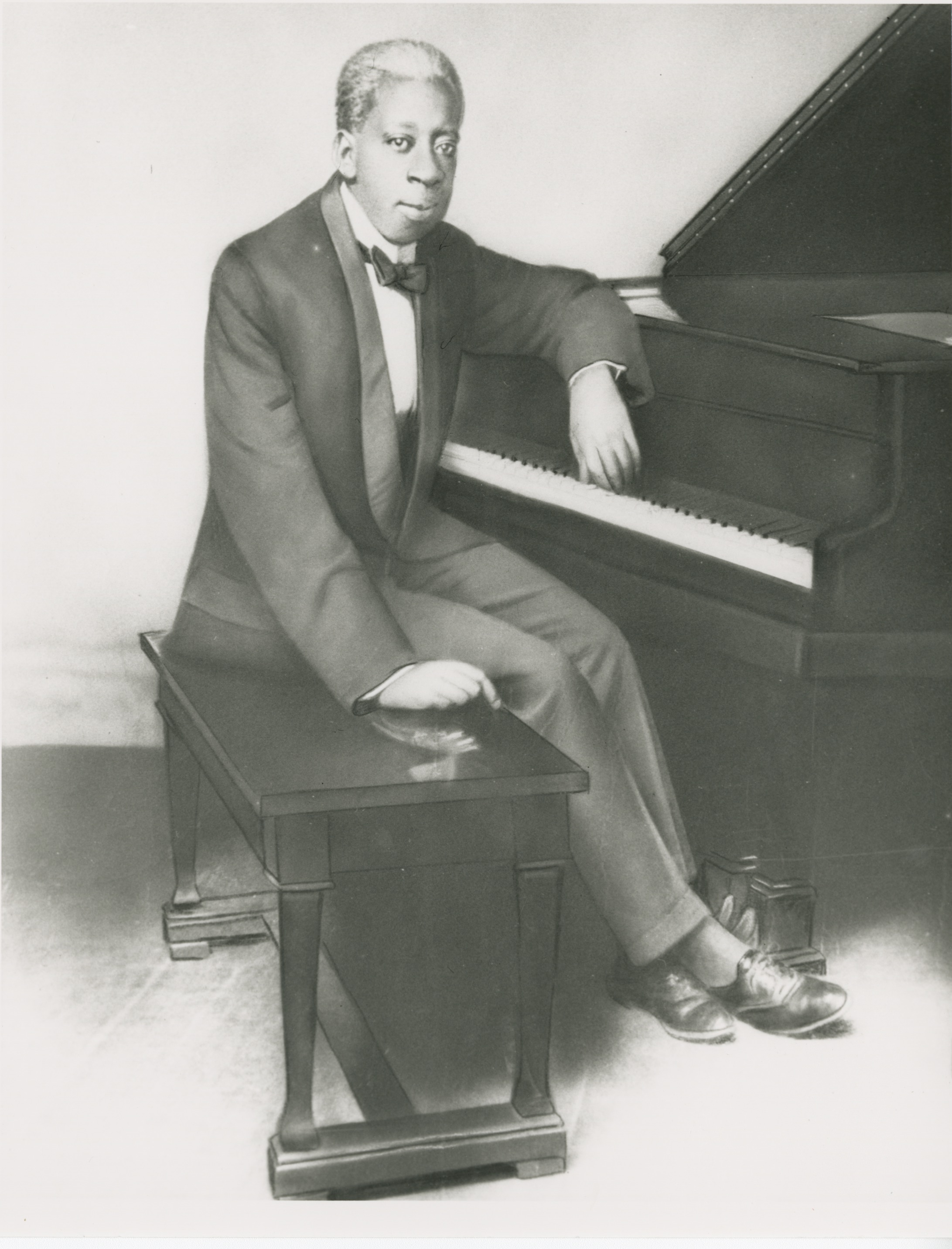
The building known as Frank Early’s Saloon is one of only three surviving structures from Storyville, New Orleans’ legendary red light district. The venue featured the virtuoso pianist and singer Tony Jackson (1882 – 1921), among the district’s most admired performers, who was an inspiration to the first generation of jazz musicians.
Jackson is best known for composing the standard “Pretty Baby,” namesake of Louis Malle’s controversial Storyville film starring an 11-year-old Brooke Shields. Some secondary sources say that Jackson wrote “Pretty Baby” here, at the corner of Franklin (now Crozat) and Bienville. This is possible, but not verifiable. Some also say that he lived on the building’s second floor, which is less likely, as that space was generally put to more profitable use by sex workers, and has not been documented as his address of record.
In any case, Jackson’s legacy runs deeper than one hit song. He was a major influence on jazz pioneer Jelly Roll Morton, who considered Jackson “the greatest single-handed entertainer in the world.” Clarence Williams, the acclaimed pianist, composer, and music publisher, agreed: “Everybody followed the great Tony Jackson,” he said. “He was so original and a great instrumentalist. I know I copied Tony.”
Along with his wide musical influence, Jackson also stands as a progenitor of a tradition of Black LGBTQ performance in New Orleans. He was openly gay, and known to sing both the “male” and “female” parts in a duet. He also inserted his own sexually explicit lyrics into popular tunes of the day. In so doing, he blazed a trail ahead of “female impersonators” like Dew Drop Inn emcee Patsy Vidalia, and “sissy bounce” rappers like Big Freedia (Jelly Roll Morton said of Jackson, “a lot of people call him a lady or sissy… But he was very good and very much admired”).
While Storyville is often romanticized in the popular imagination, the saloon’s history shows how cultural achievements like Jackson’s emerged from a deeply exploitative and violent place: Three of the four proprietors of the business in this period were arrested for murder.
A Closer Walk found that its owner in 1913, a man named Anthony Batistina, was involved in one of the most notorious events in the history of Storyville: a gunfight that killed the heads of rival dance halls on the block and upended the music scene here. In 1914, Batistina took over one of those dance halls, and a dubious figure named Frank Early took over this venue.
While Early likely employed important early jazz musicians including Manuel Manetta, Buddy Petit, and Jimmie Noone, he was best known by his contemporaries for shooting and killing a detective.
Tony Jackson’s performances
Jackson was a child prodigy as a pianist and singer, and began performing professionally as a teenager. As a young man in Storyville, he made a name for himself by performing in the piano parlors of several high-end bordellos. Patrons tipped well, and Jackson’s natty suits showed it.
Among Jackson’s employers in the early 1900s was Madam Antonia Gonzales, who advertised herself as “the only Singer of Opera and Female Cornetist in the Tenderloin.” The early jazz afficionado Roy J. Carew recalled walking past her brothel and hearing “the most remarkable playing and singing I had ever heard…the beat of the bass and the embellished treble of the piano told me at once here was something new to me.”
In Jazz Journal in 1952, Carew detailed Jackson’s style and described his gig at the corner of Franklin and Bienville:
Usually I would take the little table at the left of the piano stand, and sit there sipping my drink while I listened. Tony got to know me, and would welcome me with that happy grin of his when he saw me taking my place. He had the reputation of knowing ‘a thousand songs,’ and I have a very good notion that he did…His repertoire included all types of music, anything a customer might ask for — ragtime songs, waltz songs, march songs, ballads, semi-classics, — and he executed them all in his matchless style; he even sang duets, taking each part with equal facility. His voice was of an exceptional quality, clear and vibrant, of good timbre and wide range.
In addition to popular published music, Carew wrote that Jackson performed “his own compositions and honky tonk numbers…These honky tonk numbers were in the minority, for, although Tony doubtless knew much music of that type, I’m sure there was very little call for it at Frank Early’s.”
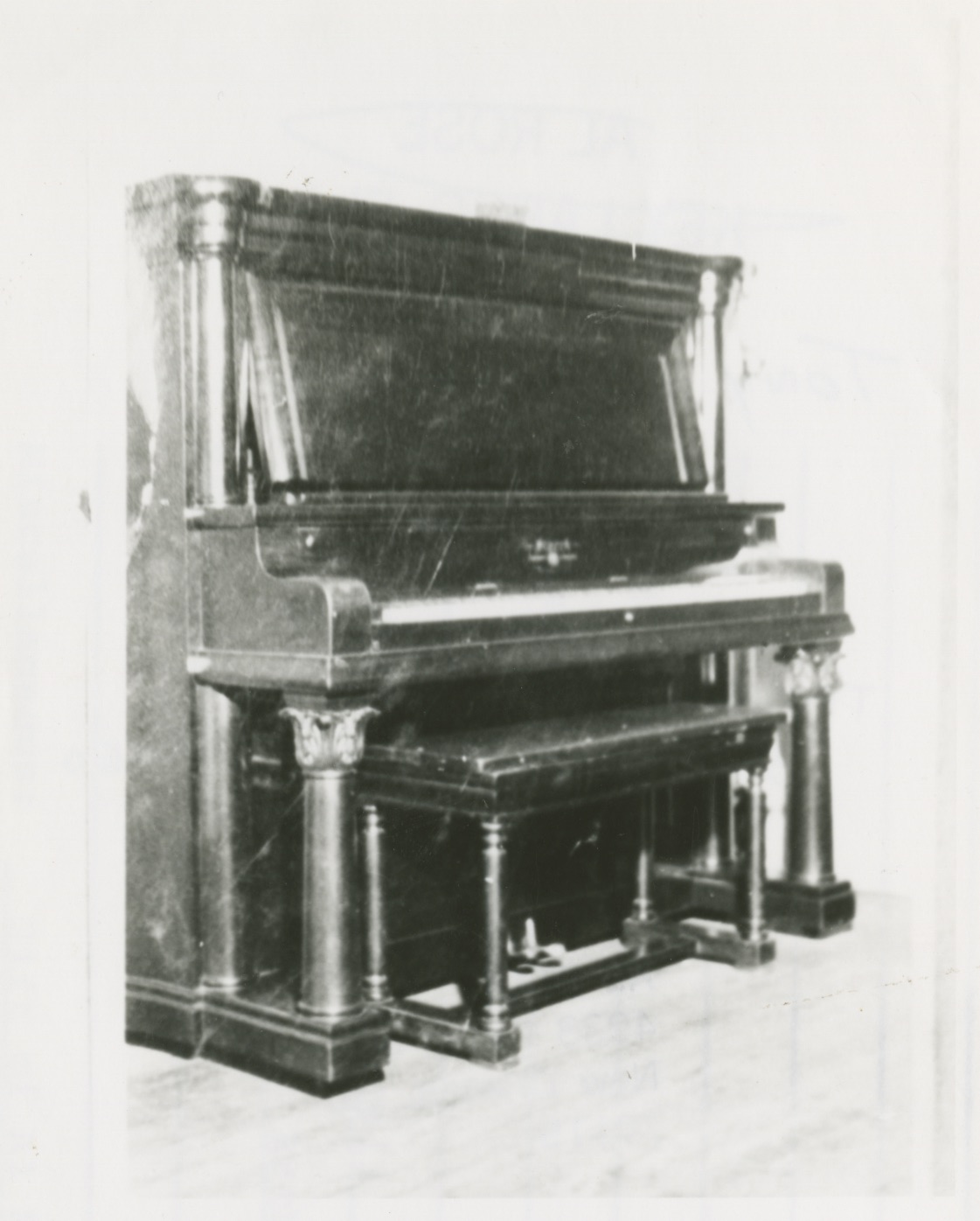
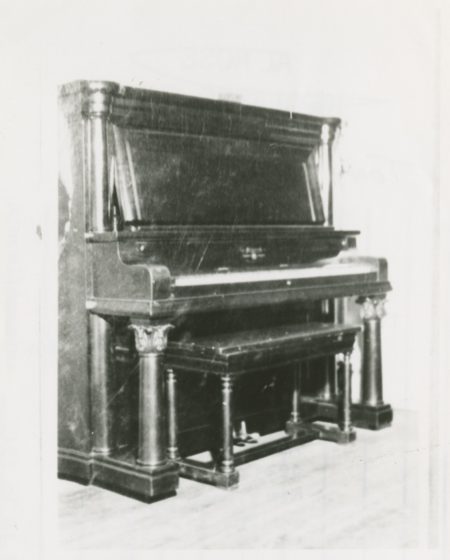
The saloon’s clientele in this period was white, and more interested in drinking and paying for sex than cutting a rug—there were dance halls for that. Carew suggested that Jackson’s performances weren’t a priority for the venue either: “The piano was in poor repair; among other defects, there was a key in the bass that would stay down every time it was hit, but that never seemed to bother Tony. He would keep going just as smoothly as a well oiled machine, and when the key would go down, Tony would pull it up without the slightest interruption to his playing and singing.”
We can’t know why Jackson might have taken such a gig after doing well for himself in the district’s well-appointed piano parlors. But dating Carew’s memories offers some context. In The Record Changer magazine, Carew referenced Jackson playing a song here that was published in 1911:
One night…a stranger stepped over to the piano and requested Tony to sing ‘Everybody’s Doin’ It,’ which in my estimation is about the poorest effort [Irving] Berlin ever put forth, even if it did get very popular. ‘I don’t know that one,’ replied Tony, and the stranger walked away and out of the cafe. I looked at Tony in surprise, and said, ‘You certainly ought to know that song, popular as it is.’ Tony grinned at me and replied ‘Oh I know it all right, — but I hate the damn thing!’
By the early 1910s, Jackson may have been spending part of the year on the South Side of Chicago. He had a reputation there by 1913, when the Chicago Defender described him as a “favorite” performer at a hotel in the city. We know that he relocated there permanently by the middle of the decade, when changes were afoot at the saloon.
The venue’s early history
Decades before the creation of Storyville, the intersection of Franklin and Bienville streets was a hot spot for nightlife—soldiers came here to drink liquor during the Civil War. Later in the 1800s, this stretch of Franklin teemed with saloons, dance halls, gambling dens, and houses of assignation.
The surrounding Fourth Ward neighborhood was working-class and densely populated by a mix of Black and European immigrant families. In 1893, when a Sicilian man named Salvatore Ferrara received a permit to operate a bar on this corner, at least two of the residents on the second floor were Black women.
By 1897, when the City voted to establish Storyville, Ferrara appears to have rented the bar to 56-year-old Rosario Coletti. The two men and Coletti’s wife all hailed from the same mountain town outside Palermo, Sicily, and had come to New Orleans in the wave of Italian immigration to the city in the late 1800s.
The Colettis moved above the saloon, where a few single women also lived and plied their trade in adjacent rooms called cribs. Coletti tended bar downstairs, where, like Ferrara, he became known by the Anglicized name Sam.
On a summer night in 1901, Coletti was out of town when his home and business went up in flames. According to the New Orleans Item:
The location is just on the edge of what is known as Storyville, and its disreputable denizens flocked in all sorts of garb to the fire. There were some hair-breadth escapes. A negro was pulled half dead from the burning structure, sleeping too soundly to be aroused by the flames and smoke. One old woman was pulled from a burning room just in the nick of time. Another woman, whose poodle was in the flames, rushed in to get it, and was thrown bodily into the street by a spectator because she would not leave.
The report estimated that 10,000 spectators watched the place burn. The building was almost completely destroyed, even though a firehouse was located less than a block away. Neighboring structures were damaged, too, including some adjoining cribs and the rear end of Mahogany Hall, the famous madam Lulu White’s opulent bordello, which fronted Basin Street.
The White Rock Saloon
A saloon with cribs on a busy corner of the District was too profitable not to rebuild. If Coletti hadn’t already bought the property, he may have done so at this point, as his name would be associated with the restored building at this address for the remainder of the Storyville era (the Colettis moved to an Uptown residence by 1910).
In the spring of 1906, Coletti appears to have leased the barroom to a young man from the Treme area named Andrew Anthony Desina, who operated it as the White Rock Saloon.
We don’t have documentation of music from this period, but we know that in November 1906, Desina paid a drunken visit to his paramour, a woman who worked in a nearby crib under the assumed name Doris Sheldon. After Desina found Sheldon sitting on another man’s lap, he shot and killed her.
Records suggest that Desina continued operating the saloon while his case trudged through the legal system. A mistrial and other procedural delays postponed his conviction until sometime after May 1908. He was given a life sentence, but released from prison after just a few years.
Despite this, business remained brisk at the corner of Bienville and Franklin, so after Desina’s conviction, a man named Anthony Batistina and his business partner filed paperwork to keep the saloon running. Batistina is probably the proprietor who hired Tony Jackson in the early 1910s.
Anthony Batistina and the shootout at the Tuxedo Dance Hall
One day in 1911, according to the Times-Picayune, two of Batistina’s neighbors got into an argument in his saloon. The proprietor of the bar catty corner from Batistina’s fired a gun at Charles Parker, then a co-owner of the 101 Ranch Dance Hall a few doors up Franklin Street.
The bullet missed its mark, but the ensuing legal proceedings outed Charles Parker and his brother, Harry Parker, as gangsters from New York who’d come to New Orleans under false names to muscle their way into Storyville. If Batistina wasn’t an enemy of the Parkers before testifying in the shooter’s defense, he was afterward.
Batistina had plenty of company in that regard, including his friend Billy Phillips, a diminutive but scrappy saloonkeeper. In 1912, Phillips bought the 101 Ranch from the Parkers, renaming it the 102 Ranch. As part of the sale, the Parkers agreed not open a competing dance hall, but they reneged, opening the grand Tuxedo Dance Hall directly across Franklin Street.
By 1913 tension between the Parkers and their neighbors reached a breaking point. Late at night on Easter Sunday, some of Phillips’ employees visited the Tuxedo, and Harry Parker ejected them violently. Phillips then went to the Tuxedo himself—either to diffuse the situation or provoke a showdown, depending on the account. Some said Batistina joined him, and brought his gun. Batistina denied this.
We know that Phillips ordered a round of drinks at the saloon in the front of the Tuxedo, and that an associate of the Parkers called Gyp the Blood jammed a .38 in his back and pulled the trigger. This touched off a hail of gunfire that filled the saloon with smoke.
Phillips and Harry Parker were killed. Charles Parker was injured, and fingered Batistina as the man who shot him. Prosecutors couldn’t prove the source of any given bullet in the chaos, however, and a grand jury declined to indict Batistina.
After the shooting, police shut down the district’s dance halls for several months, and ramped up law enforcement around Franklin Street. In September, one of Batistina’s bartenders was arrested for selling cocaine out of the bar, casting a new light on the name White Rock Saloon (cocaine was legal the district, when sold by a pharmacy). As a result, the city rescinded the venue’s “all-night permit.”
We have no way of confirming if or how these events may have affected Tony Jackson, but five days after the shootout, he was gigging in Chicago, and if he intended to return to New Orleans in the fall of 1913, the precarity of his regular gig here could have incentivized him to stay up North.
There were likely larger forces behind Jackson’s decision to relocate permanently, though. Jelly Roll Morton said that Jackson moved to Chicago because “he liked the freedom” there, a reference to the constraints Jackson experienced as a gay man from religious family in relatively small city.
All we know for sure is that, by the summer of 1914, Jackson’s performances were mentioned regularly in the Chicago Defender.
That year, Batistina left the saloon to take Billy Phillips’ place at the larger 102 Ranch up the block. The White Rock then became the My Place Cabaret.
If Jackson returned to his gig here in the winter of 1914-1915, when Frank Early took over the business, he didn’t stay in New Orleans much longer. (Carew acknowledged that, while he referred to the saloon where he saw Jackson as “Frank Early’s,” he may have applied that name anachronistically.)
Frank P. Early and the My Place Cabaret
We have only a few fragments of information about the musical life of the venue after Jackson’s departure.
In Storyville, New Orleans, author Al Rose wrote that multi-instrumentalist Manuel Manetta performed at Early’s. While Rose’s book lacks citations and includes inaccurate information, Manetta himself is the likely source here, as he gave extensive interviews about his years of work across the district. He would have been an attractive hire for a venue looking for a solo pianist to replace Jackson.
It also seems that Early’s rebrand from “saloon” to “cabaret” entailed hiring some larger combos.
In the seminal book Jazzmen, William Russell and Stephen W. Smith wrote that the venue presented a band featuring cornetist Buddy Petit and clarinetist Jimmie Noone. While this claim lacks a citation as well, it aligns with a second account of Petit and Noone in this time period.
According to author Lawrence Gushee, Noone said that he played with Petit for a couple of years in the six-piece Young Olympia band, which formed after cornet “king” Freddie Keppard, of the regular Olympia Band, left town. Keppard embarked on a series of influential national tours with the Original Creole Band in 1914, so the Young Olympia came together when Early would have been booking the cabaret. (Harold Dejan cited this Olympia and Young Olympia as inspiration for the bands he put together with the same names decades later.)
In any case, Early’s background suggests that his interest in taking over the business was not as a patron of the arts. Born around 1871, he had a long criminal history, and, according to his mother, a taste for fancy clothes. His focus at the cabaret was likely on the money to be made from the bar and from the eight women listed at its address in the 1914 Blue Book, a directory of Storyville sex workers.
Music must have been even further from his mind in late 1916, when his mother Mary “went to the second city criminal court…and in a quavering voice made an affidavit accusing her son, Frank, of stealing her life-time savings amounting to $1,585,” according to the States.
Early was arrested, but the following month his mother dropped the charges, saying that she no longer suspected him. Her son’s legal problems were far from over, though.
The following week, in February 1917, the cabaret was caught in a crackdown on the Sunday Law, a blue law prohibiting the sale of liquor. Then, in the spring, Early was arrested for running a gambling operation at Big 25’s, a hangout for musicians in the district. By summer, the contents of Early’s cabaret were sold at auction, and in November, under pressure from the federal government, the city dissolved Storyville.
These legal entanglements didn’t set Early on the straight and narrow. When Prohibition began, and his former cabaret became a “soft drink parlor,” he ran a speakeasy a block away.
Later in the 1920s, he joined Huey Long’s political apparatus as a Fourth Ward precinct captain, and appears to have been rewarded with a job as a patrolman for the Dock Board—the habitual offender became an officer of the law. Early’s relationship with the New Orleans Police Department, however, remained touch-and-go.
In 1934, in a barroom a stone’s throw from his old cabaret, witnesses said that Early told Detective James T. Ford to let up on a friend of his whom Ford had arrested. Ford refused, and Early shot him dead. After a trial in which prosecutors accused the defense of “the most audacious attempt at fixing witnesses that has ever been done in the parish of Orleans,” according to the States, Early was sentenced to life in prison.
In 1938, back at the corner of Crozat and Bienville, the former saloon and cabaret was up for rent as a “Colored restaurant and bar” in a “Lively neighborhood.” The neighborhood transformed shortly thereafter, though.
City officials, eager to erase Storyville’s tawdry legacy, and to segregate a previously diverse area, bulldozed nearly all of the former district and replaced it with a public housing development for white tenants only. The block containing Frank Early’s cabaret was one of two from Storyville to avoid demolition.
The Iberville project opened across the street in 1941, and the old saloon building became a corner convenience store. It remained one for most of a century, until 2023, when District Attorney Jason Williams alleged that it was a criminal hotspot, involved in illegal drug and weapons trafficking. It has been closed since then, and, as of this writing, is up for sale.
Videos

Jelly Roll Morton's discussion of Tony Jackson and renditions of some of Jackson's material from Morton's Library of Congress Recordings.
Posted by ItsRemco.
Jelly Roll Morton's discussion of Tony Jackson and renditions of some of Jackson's material from Morton's Library of Congress Recordings.

Piano roll of the Tony Jackson composition, "I'm Cert'ny Gonna See 'bout That."
Video posted by Adam Swanson.
Piano roll of the Tony Jackson composition, "I'm Cert'ny Gonna See 'bout That."
Piano roll of the Tony Jackson composition "Ice and Snow (or Don't Leave Me in the Ice and Snow)."
Posted by Paul Manganaro.
Piano roll of the Tony Jackson composition "Ice and Snow (or Don't Leave Me in the Ice and Snow)."
An hour-long talk about the role of Storyville, including Frank Early's cabaret, in the development of jazz, by A Closer Walk editor Jordan Hirsch.
Produced by The Potomac River Jazz Club.
An hour-long talk about the role of Storyville, including Frank Early's cabaret, in the development of jazz, by A Closer Walk editor Jordan Hirsch.
Images