13th Ward
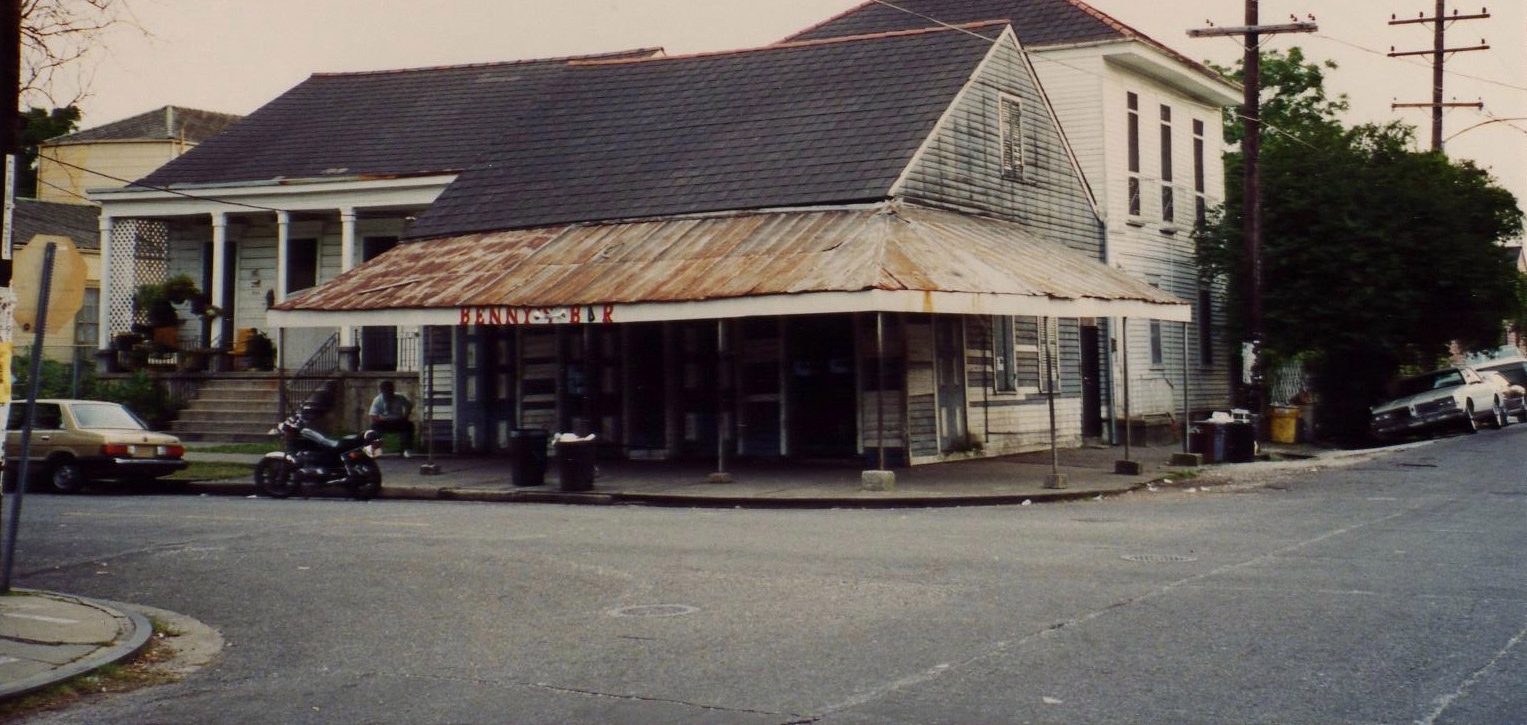
The 13th Ward, a narrow wedge of Uptown New Orleans, is best known as the longtime home of the Neville family and a community of instrumentalists who helped define funk music in the 1960s and 70s.
But the area’s musical legacy spans the 20th century, from early jazz players Willie and Percy Humphrey, who became widely known later in life in the Preservation Hall Jazz Band, to the rapper B.G., one of Cash Money Records’ Hot Boys, who mainstreamed the term “bling bling.”
In his memoir, the internationally renowned drummer Idris Muhammad, a 13th Ward native, asks rhetorically, “Do you know how much music is in this neighborhood?” He grew up in a family of musicians, where drummers practiced in the living room, a jukebox played in a barroom next door, Mardi Gras Indians beat tambourines on the next block, and brass bands paraded through the streets.
As Art Neville, leader of the Hawketts (which included Muhammad on drums), leader of the Meters, and founding member of the Neville Brothers, recalled his upbringing: “The ‘hood was alive with good feeling. Smells of good food and sounds of good music in the air. Good folk. … We were all in it together. I’d call it a beautiful home.”
Demographics of the 13th Ward
Black residents like the Nevilles forged a tight-knit community in an area that was at once racially mixed and ordered by white supremacy.
Beginning in the 1800s, wealthy white families populated the wider avenues, while working-class families—Black and white—moved into densely packed shotgun houses on the side streets between them.
Within this lattice pattern, a higher proportion of Black people lived near Napoleon Avenue, the 13th Ward’s downriver boundary, while a higher proportion of white people—among them Italian, Irish, and German immigrants, including some Jews—lived near Jefferson Avenue, the upriver boundary.
Charles Neville characterized Valence Street, where he grew up in a house owned by his great aunt in the 1950s, as “a blue-collar neighborhood on the edge of the Garden District…. Many of the little houses on Valence were originally occupied by people who serviced those mansions. Auntie Cat was one of those people…. She must have raised a couple of generations of kids for those white families.”
Black and white people living side by side during Jim Crow created some opportunities for cultural exchange, but also posed a threat to Black residents.
Recounting his childhood of the 1950s and 60s, Cyril Neville wrote that “the black neighborhoods were surrounded by white ones. It felt like living in occupied territory. You’d have to watch where you walked. It was scary.” Charles reflected that, “When I was a kid, if a white woman said, ‘Hey, boy, come here,’ you went. Same with white men.” Failures to comply could be met with violence.
Residential segregation increased markedly after the forced integration of public schools in the 1960s, when white families began moving away from the neighborhood en masse.
By 1980, the old lattice pattern faded, as white residents remained mostly within a few blocks of stately St. Charles Avenue, and, to a lesser extent, between Claiborne Avenue and Fountainbleau Drive, the upper tip of the 13th Ward.
The area maintained a solid Black majority until a few years after Hurricane Katrina, when various public policies, including a zoning change along Freret Street, led to the displacement of Black homes and businesses, and widespread gentrification.
Music from the Mississippi River to Prytania Street
Much of the 13th Ward’s development was influenced by its relationship to the Mississippi River. Beginning in the 19th century, men living in the shotgun houses closest to the river, including Aaron Neville, found work on its banks, often as stevedores.
The first several side streets paralleling the levee, where the cacophony of heavy industry on the river remained audible, filled with working-class housing. In the mid-20th century, Idris Muhammad wrote, this area “was full of people that had kids…. Our neighborhood was mostly musicians and schoolteachers.”
McDonogh No. 6 elementary school had a music program, where professor Solomon Spencer taught countless children in the district to read music. Legendary educator and clarinetist Alvin Batiste taught music there, too.
Donald Harrison, Sr. began masking Indian when as a teenager while living on the grounds of No. 6, bringing the percussion of the Mardi Gras Indian tradition to the neighborhood in the late 1940s. The Neville brothers’ uncle George Landry, also known as Big Chief Jolly, went further, basing the Wild Tchoupitoulas tribe in the neighborhood in the 1970s.
Black Carnival celebrations in the 13th Ward were only blocks away from white krewes’ parades on Napoleon and St. Charles avenues, which included marching bands and, eventually, amplified music as well. Musicians from this end of the neighborhood consistently cited Mardi Gras as a formative sonic influence.
Churches of various denominations proliferated in this section, with choirs, organs, and in some cases, full bands. After first hitting an organ key as a child in Trinity Methodist Church in the early 1940s, Art Neville’s Hammond B-3 work with the Meters earned him the moniker Papa Funk. These places of worship were also starting points for jazz funerals, which brought brass bands to the streets.
Pianos and record players were common in many houses. Cyril Neville told OffBeat, “There was always a piano in our home because my momma sang, my daddy sang, my grandmother sang. When my grandma got up in the morning and started cooking breakfast, she had a song for that. She had a song when she was washing, everything had music associated with it…When I realized what African culture was, I realized that’s how I had grown up.”
This “village,” as Neville described it, produced scores of notable musicians, but became best known for its rhythm players born in the mid-20th century, including drummers Idris Muhammad and Zigaboo Modeliste, and bassists George Porter, Jr. and Walter Payton.
Music between Prytania and Dryades Streets
While working-class families lived closest to the river, wealthier households stayed a comfortable distance from the hubbub of the railroad tracks and docks that flanked it, while remaining on the naturally high ground that extended about a mile from its bank. This portion of the 13th Ward is bisected by St. Charles Avenue, where a streetcar runs under a canopy of live oak trees.
This affluent, white section never had a residential community of working musicians like the more diverse and predominantly Black sections. It did, however, have a number of music education programs.
New Orleans University, a Black institution, moved into a gothic revival building on St. Charles and Leontine in 1889, complete with a music department and a touring vocal group. In 1935 the campus was taken over by a high school for Black students called Gilbert Academy, which would graduate pianist Ellis Marsalis. In 1949 De La Salle High School, then exclusively for white boys, opened in a new building on the site. It would be attended by music historian Tad Jones, composer Jay Weigel, and Josh Mayer, better known as Ooah from The Glitch Mob.
Just across Leontine on St. Charles, the Jewish Orphans’ Home taught music to its charges, and formed its own brass band in 1902. From 1931 until 1943, the orphanage was home to Joe Bihari, co-founder of Modern Records, who would help make B.B. King a star. (The Jewish Community Center that opened on this site in 1967 occasionally presented live music, too.)
Newman School on Jefferson Avenue has a music program as well. Piano prodigy Harry Connick, Jr. was a student here.
Just behind Newman’s campus, the Neutral Ground Coffee House, known first as the Penny Post, was one of the few music venues in this part of the 13th Ward, with a longstanding open mic night and mostly acoustic performances from the late 1970s until 2023.
To the lakeside of Dryades Street
Further from river, on the far side of St. Charles Avenue, the terrain was lower and prone to flooding. Among the earliest features in this area, dating to the mid-19th century, were two cemeteries where brass bands played for funeral processions.
Residential and commercial development picked up in the early 1900s, when new technology allowed the land to be drained. The blocks between Dryades and S. Claiborne Avenue filled with modestly-sized houses, mostly rented to working-class tenants, Black and white.
By 1920, residents included the musical Humphrey family. Clarinetist Willie Humphrey played with everyone from King Oliver to Paul Barbarin, and his brother, trumpeter Percy Humphrey, was the leader of the Eureka Brass Band.
A commercial strip took shape on Freret Street in this period, and in 1953 the Krewe of Freret began an annual Mardi Gras parade that put music on the street for the next four decades. Sylvia’s Lounge opened on Freret in 1963, and in the 1970s became known for late-night music, especially by 13th Ward resident James Rivers, a versatile saxophonist who also took up the bagpipes.
A block off Freret on Valence Street, Samuel J. Green Middle School opened for Black students in 1952, developing musical talent from the immediate area as well as the older, riverside section of the 13th Ward. Aaron Neville formed a doo-wop group here, and the school’s marching band practices added to the soundscape of the neighborhood.
When Bryan “Baby” Williams (also known now as Birdman) attended Green in the early 1980s, Freret was in decline, and the whole area suffered from divestment. Williams started hustling on Valence Street, and eventually channeled that experience into a legitimate business, Cash Money Records, the most successful label in New Orleans’ history.
A pivotal moment in the rise of Cash Money came around 1995, when Williams purged his roster of artists except for 15-year-old rapper Christopher Dorsey, known as B.G., who lived nearby at Valence and Magnolia. B.G. would help propel the label to a national distribution deal in 1998, representing the 13th Ward in his lyrics.
In 2005, when Hurricane Katrina caused catastrophic levee failures, floodwater poured into the 13th from the lakeside, damaging this section while sparing the higher ground closer to St. Charles and the river. One of the flooded houses near Freret was home to recording artist and Black Masking Indian Big Chief Monk Boudreaux. He managed to return to it, but many of his neighbors were not so fortunate.
Amid the post-Katrina gentrification, a new live music venue, Gasa Gasa, opened on Freret in 2013, with eclectic bookings catering to a young crowd.
Videos

Aaron Neville speaks to A Closer Walk about his formative experiences in the 13th Ward.
Video posted by the Ponderosa Stomp. Editing by e/Prime media.
Aaron Neville speaks to A Closer Walk about his formative experiences in the 13th Ward.
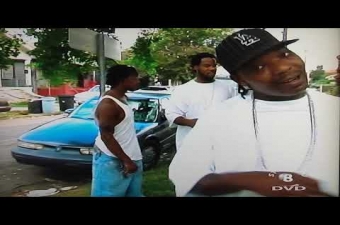
B.G. hanging on the corner of Valence and Magnolia in the 13th Ward, where he grew up.
B.G. hanging on the corner of Valence and Magnolia in the 13th Ward, where he grew up.
B.G. hanging on the corner of Valence and Magnolia in the 13th Ward, where he grew up.
Images