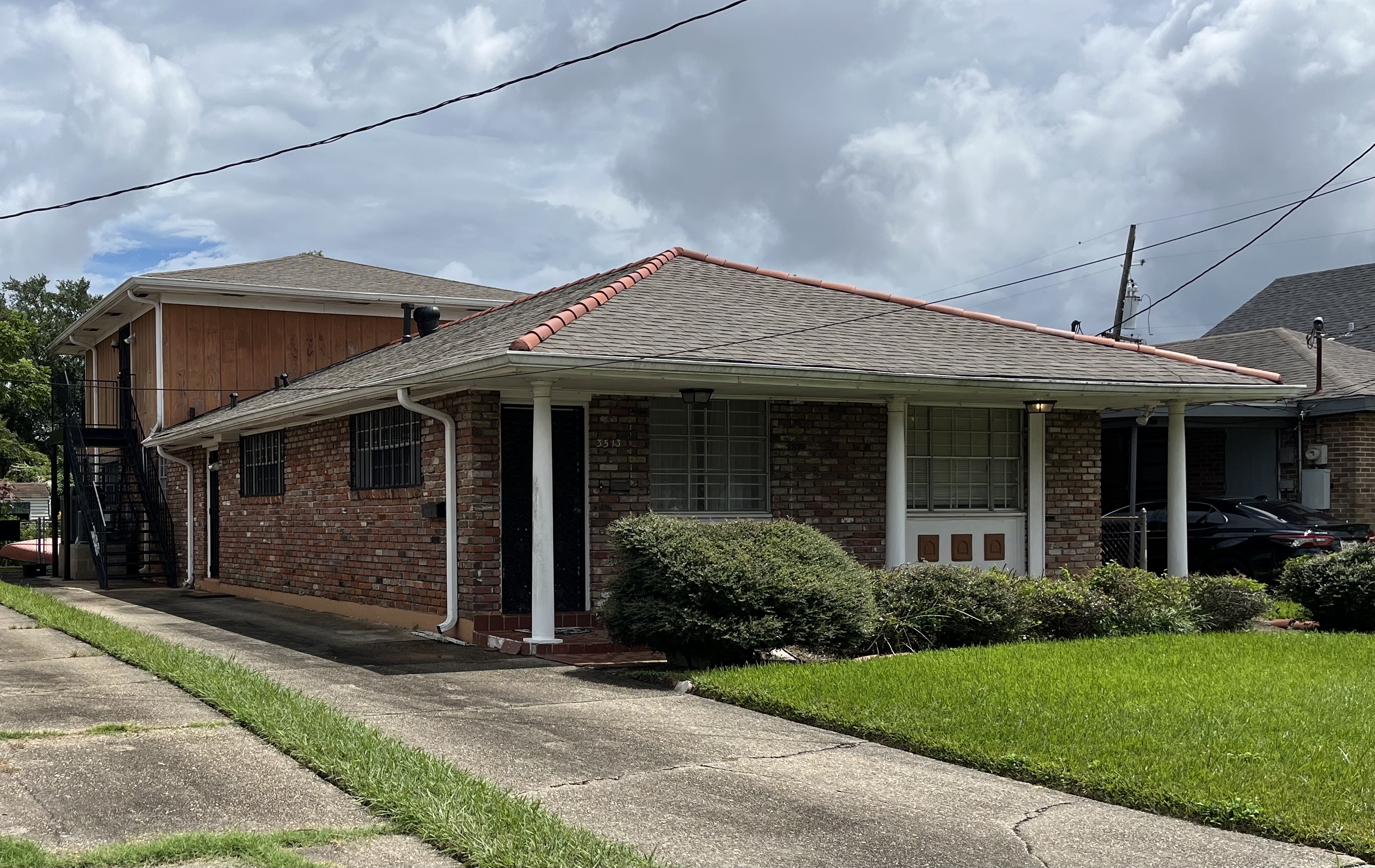
Donald Richardson’s House
3513 Havana St.New Orleans LA 70122
Band director Donald Richardson (1943 – 1995) built the music program at Andrew J. Bell Junior High School in Treme, producing generations of accomplished musicians and music educators, from composer Moses Hogan to sousaphone virtuoso Kirk Joseph to drummer and Roots of Music founder Derrick Tabb.
Richardson’s work at Bell played a vital yet underappreciated role in advancing the brass band renaissance instigated by Danny Barker with the Fairview Baptist Church band in 1970.
Located in the Sixth Ward, then home to many families with ties to New Orleans’ brass band and parading traditions, Bell provided generations of young musicians with foundational training that they used to carry those traditions forward.
Richardson’s program produced leaders of a legion of new brass bands, including Gregory Davis of the Dirty Dozen Brass Band, Dimitri Smith of Smitty D’s Brass Band, Anthony Bennett of the Original Royal Players Brass Band, Brice Miller of the Mahogany Brass Band, Daryl Fields of the High Steppers Brass Band, and Desmond Venable of the Red Wolf Brass Band.
Richardson also developed several Important instrumentalists, such as Kirk Joseph, whose sousaphone playing with the Dirty Dozen influenced just about everyone to follow, and Derrick Tabb, whose snare drumming with the Rebirth Brass Band has been a touchstone for young drummers across the city, and Doreen Ketchens, one of New Orleans’ most prominent clarinetists.
In addition to his work at Bell, Richardson directed some of the best-loved church choirs in the New Orleans area, including that of the Pure Light Baptist Church, which got national press in the 1980s, and of Gretna’s Regular Baptist Church, which lit up the Gospel Tent at Jazz Fest.
Whether he was teaching adults or middle-schoolers, Richardson inspired devotion from his band members by demanding the best from them, without compromise.
While “Mr. Rich” was much admired in the marching band and church choir communities, where he won numerous honors, his contributions to New Orleans music have not been fully recognized by the general public, due in part to his untimely death in 1995, at age 52.
More than three decades later, those who knew him keep his legacy alive across the city. Many of his former students became educators themselves, including Dimitri Smith, who returned to Bell as Richardson’s assistant. Brass band leaders Miller and Venable also teach, and Tabb modeled The Roots of Music, his award-winning after-school music education program, on Richardson’s program.
Early life, education, and beginnings at Bell
Richardson grew up in the area of New Orleans’ Central City now called Hoffman Triangle, in a house full of music. His sister, Janice Manuel, told A Closer Walk, “My parents were very socially active, loved Mardi Gras, belonged to a few social clubs, so there were always gatherings at our home…it was a very lively household in a very lively neighborhood.”
Richardson’s formal music education began with private piano lessons under Patricia Sallier, who taught out of her Uptown house on Saturdays. He also took lessons on a rented trumpet at Werlein’s Music Store, and at Carter G. Woodson Middle School.
At Booker T. Washington High School, Richardson studied trumpet and French horn with Dr. Ernest Chachere, who encouraged him to pursue music education as a career. Richardson went on to Xavier University, where he played in the concert band with Lloyd Harris, Jr., who also became a storied New Orleans band director.
Meanwhile, the second principal of Bell Middle School in Treme, Miriam D. Martin, was looking to expand music education opportunities in the neighborhood. Martin was the former band director at nearby Joseph A. Craig Elementary, and wanted to expand access to music education for middle-schoolers in the Sixth Ward. When Richardson graduated from Xavier in 1963, she tapped him to a build a music program from scratch at Bell.
“The school did not own any instruments and very few students possessed personal instruments,” Richardson would write. “The first band consisted of only sixty members and were uniformed in white shirts/blouses and blue trousers/skirts which was clothing that most students had in their wardrobes.”
Building institutions
Later in the 1960s, with more instruments and proper uniforms, Richardson established Bell’s reputation as a middle school marching band that could go toe-to-toe with New Orleans’ vaunted senior high schools.
He also shepherded his students through the tumult of desegregation in the city and the national civil rights movement.
Though he was not known for overtly political statements himself, one of Richardson’s students in this period, Richard C. Thomas, recalled the Bell band learning James Brown’s 1968 hit “Say It Loud – I’m Black and I’m Proud,” with members putting their fists in the air when they performed it.
When the Marching Crusaders joined previously all-white Carnival parades in this period, Thomas recalled spectators thowing beer cans in the sousaphones.
“But people loved the music,” he told A Closer Walk.
According to news anchor Norman Robinson, Richardson also helped establish a New Orleans gospel institution in the late 1960s.
Robinson, a friend of Richardson and member of his choir at the Pure Light Baptist Church, said that Richardson was “instrumental in helping develop” the Gospel Soul Children under Albert Hadley, one of the city’s top choirs, continues today.
“That kind of gospel music presentation was new. It was all New Orleans. It grew out of the grassroots, African-American New Orleans culture, much the same way the jazz grew out of the African American New Orleans culture,” Robinson told A Closer Walk.
The Bell program
While the marching band quickly became Bell’s calling card, there were other arms of Richardson’s program. A cadet band groomed beginners, and a concert band staged a formal symphonic concert every spring.
As the program grew, and its parade appearances opened the eyes and ears of families with aspiring musicians, it attracted talent, and became feeder for the city’s top high school bands, including St. Augustine and McDonogh No. 35.
In 1974, when the school system failed to provide sufficient funding for the Crusader band, parents of band members rallied to raise $17,000 to keep the program on track.
In this period Bell became known as one of the best junior high school bands in the country, and Richardson regularly fielded requests for his band to appear at special events.
Bell became the first junior high school band to perform at Disney World in 1979, played at the opening of Louis Armstrong Park in 1980, marched in the National Cherry Blossom Festival Parade in Washington, D.C. in 1981, and had to decline an invitation to tour Romania in 1983 due to political instability under Nicolae Ceaușescu.
In the 1980s, Richardson began supplementing his students’ practice regimen with summer school held at his Gentilly home. Tabb recalled that, though he was required to bring his drum, Richardson spent most of these sessions drilling students on various rhythms with hand claps.
The program thrived until the 1994 – 1995 academic year, when Richardson’s health began to fail him. He died in March 1995.
In the aftermath of Hurricane Katrina in 2005, the school system chose to reopen Bell. It has since been renovated as housing for working artists.
Videos
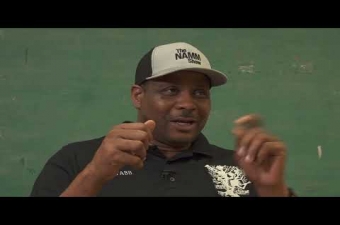
Derrick Tabb of The Roots of Music discusses the legacy of his former teacher Donald Richardson.
Video for A Closer Walk by WWOZ.
Derrick Tabb of The Roots of Music discusses the legacy of his former teacher Donald Richardson.
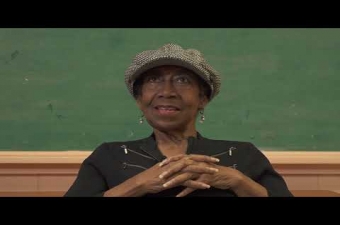
Janice Manuel discusses the legacy of her brother, band director Donald Richardson.
Video for A Closer Walk by WWOZ.
Janice Manuel discusses the legacy of her brother, band director Donald Richardson.
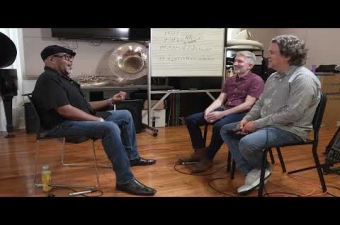
Kirk Joseph discusses the legacy of his former band director, Donald Richardson.
Video for A Closer Walk by WWOZ.
Kirk Joseph discusses the legacy of his former band director, Donald Richardson.
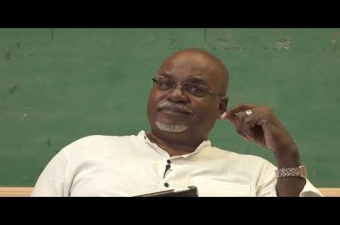
Norman Robinson discusses the legacy of his former choir director, Donald Richardson.
Video for A Closer Walk by WWOZ.
Norman Robinson discusses the legacy of his former choir director, Donald Richardson.
Images