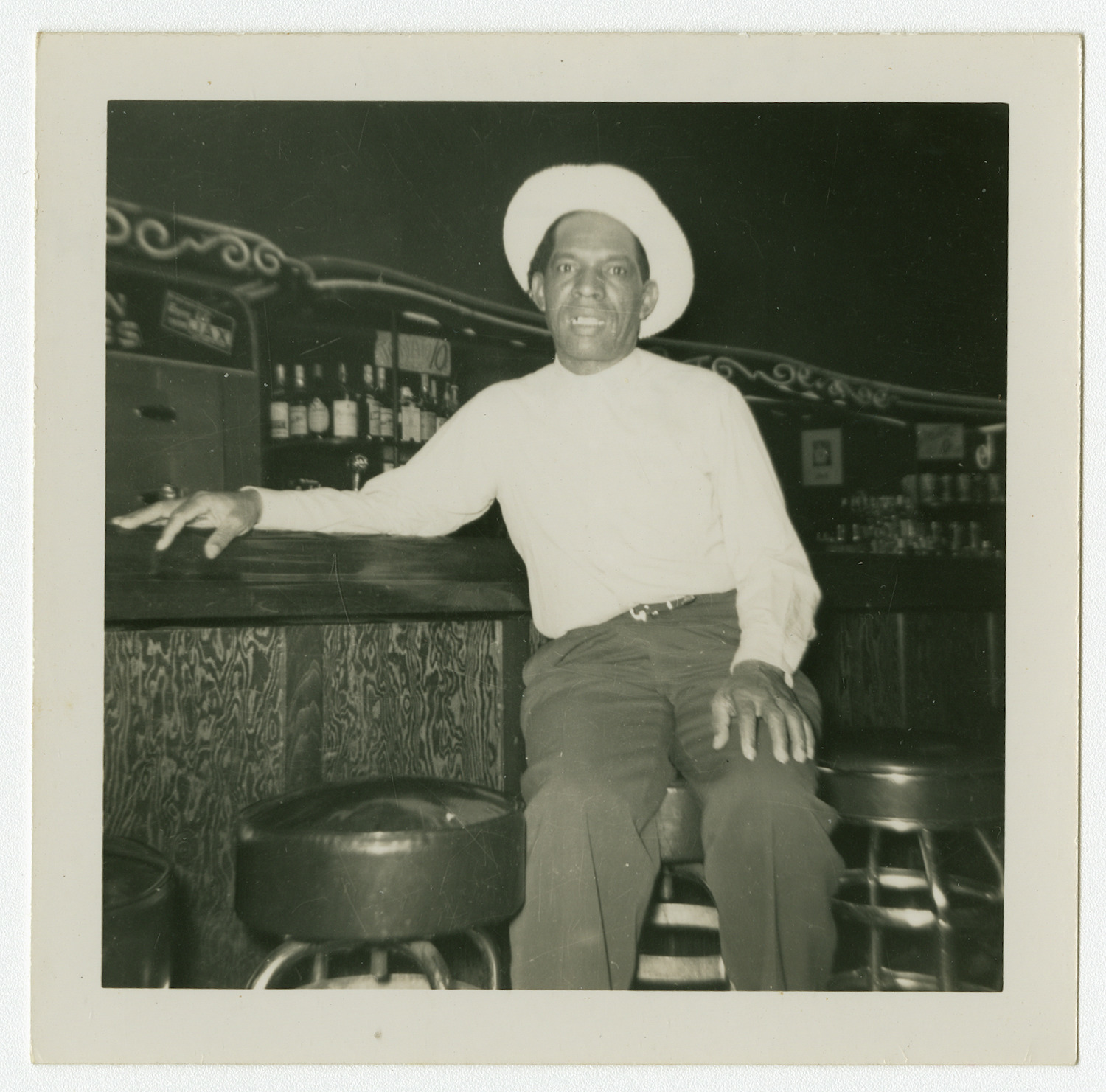
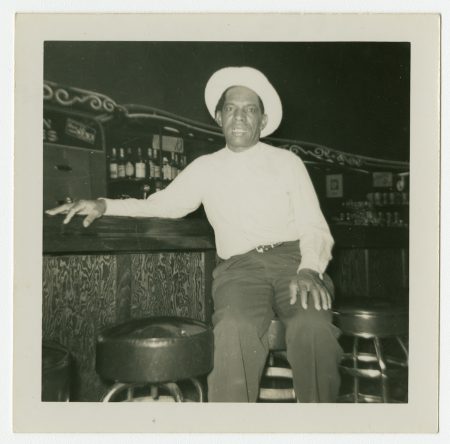
101 Ranch
206 N. CrozatNew Orleans LA 70112
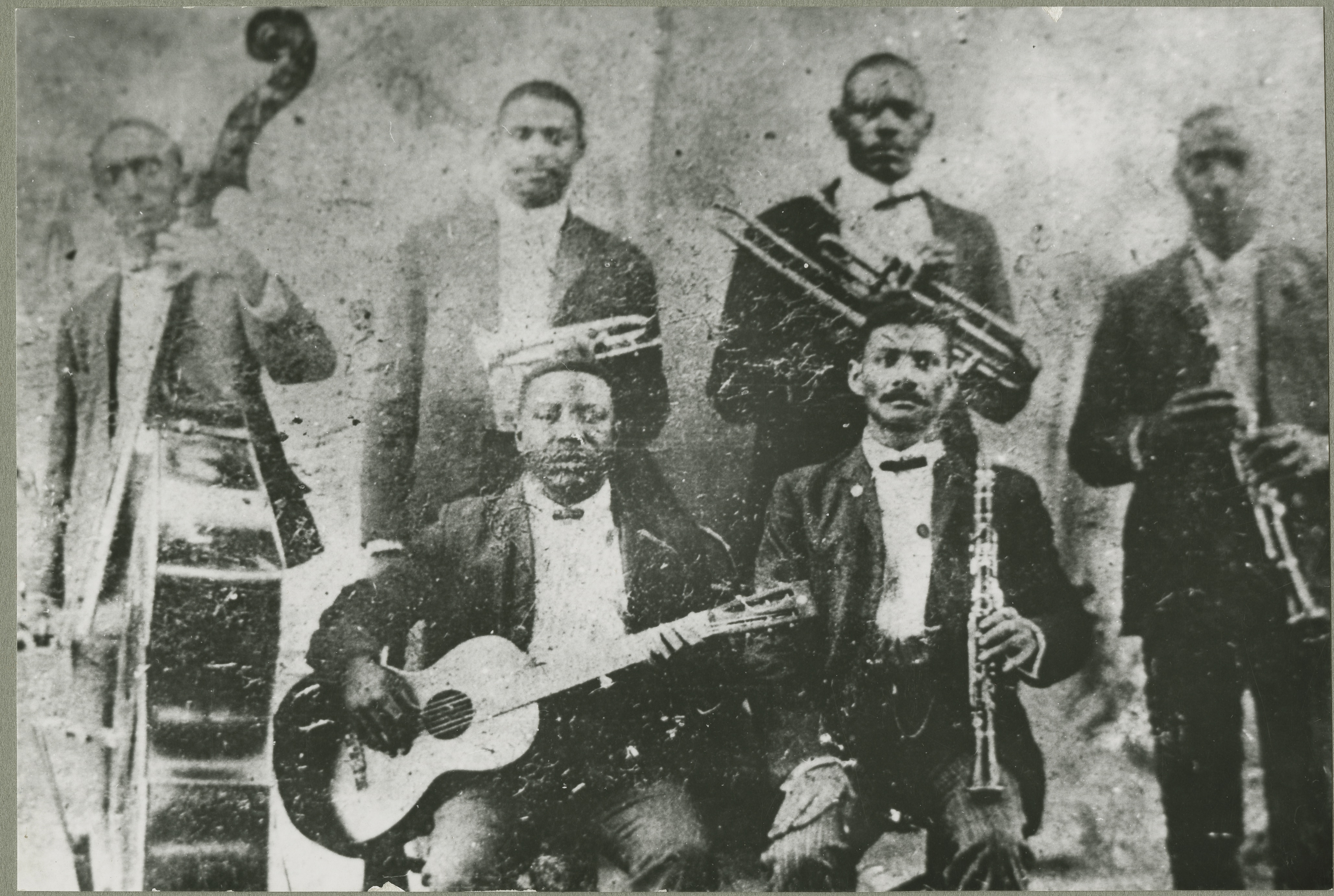
The dance hall best remembered as the 101 Ranch featured some of New Orleans’ top dance bands from before the dawn of jazz in the 1880s through the swing era in the 1930s. Buddy Bolden, the “First Man of Jazz,” likely played here, and Storyville, the city’s notorious red light district, sprang up around it.
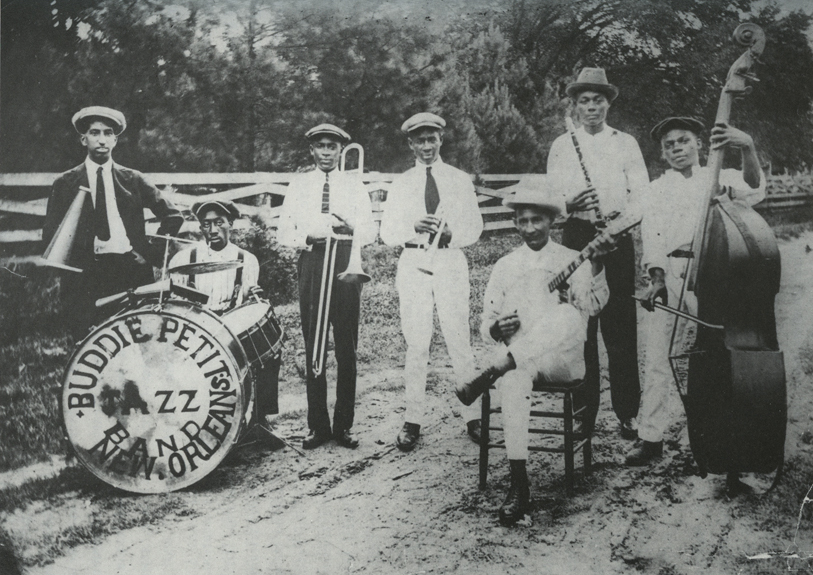
Bolden’s successors, including cornet “kings” Freddie Keppard and Joe Oliver, performed at the hall in the Storyville period, and celebrated bandleaders such as Buddy Petit and Joe Robichaux took the stage in the years after the district was dissolved.
The fact that the musicians who immediately preceded and followed Bolden, and probably Bolden himself, all appeared here makes this a major site in the development of jazz.
Its importance in the early 1910s, when Keppard, Oliver, and other jazz pioneers took the bandstand, has made it one of the district’s most famous venues. And yet it has not been fully appreciated, because historians have not connected all of its pre-1910 names (John the Greek’s, 28 Club, Kizer’s, and Goday’s) to each other, or to its post-1910 names (101 Ranch, Billy Phillips’, 102 Ranch, and The Entertainers).
The venue’s early period has also been overshadowed by one of the most sensational events in Storyville history: the mutually homicidal shootout involving its current and former owners in 1913.
The gunfight prompted a crackdown on live music in the district, and fueled a reform movement that affected the regulation of dance halls and cabarets citywide for years afterward. Some observers pointed to the shooting as the cause of Storyville’s decline, though it was one factor among many.
For much of its run, the business comprised a complex of structures at the downtown riverside corner of Crozat and Iberville (formerly Franklin and Customhouse), with multiple addresses on both streets.
A saloon and dance hall fronted Franklin, while a restaurant and grocery faced Customhouse, and for many years a gambling den was set back from the street. Second floor rooms seem to have served various uses, possibly including sex work, even before it was decriminalized in Storyville.
Public officials, law enforcement, the press, and social reformers associated the music here with criminality, and sought to suppress it. The creative breakthroughs in the dance hall proceeded despite intermittent raids, restrictions, and closures.
John the Greek’s and the early years of music on Franklin Street
The person who kept the music playing as jazz began to coalesce around the turn of the 20th century was a public figure in his day, but has since faded from memory: John Strate (also recorded as Strata and Stratta), known as John the Greek.
Strate was living here and running the business by 1880. An immigrant from the island of Lesbos, he was apparently proud of his Hellenic heritage: He named three of his children Hercules, Aristotle, and Aphrodite, and his place was known as the Greek’s (some also called it the 28 Club, a reference to its address on Franklin Street).
Strate catered to a working class and mostly Black clientele, which was reviled by the city’s establishment. In 1883, the Times-Democrat considered the corner of Franklin and Customhouse to be “one of the worst” in New Orleans, and singled out the Greek’s as one of “the principal resorts for all the vile and low characters…of that neighborhood.” It went on:
In these places the idle, the dissolute and the thieves…make night hideous with their carousals…. It is here the forsaken negress gets drunk, shrieks, dances and revels in the mysteries of voodon exhibitions. As strange as it may seem, white men are often to be found among them, and occasionally some miserable, fallen white woman makes her appearance there, and joins in the debaucheries….
In reality, Strate hosted balls put on by various secular organizations, and eventually hired a house band to entertain patrons on a nightly basis.
Accounts of music in the 1880s are scarce, but we know from the Times-Picayune that the promoter of a ball in 1884 got a permit “to make the music for the dancers by a banjo and tamborine [sic].” When a policeman found a larger string band performing at the event, he ordered them to stop. The promoter “positively refused, and as a consequence he and the balance of the band were taken to jail.”
In 1892, the Times-Picayune dispatched a reporter to gawk at “the dives” around Franklin and Customhouse streets. The venues’ “orchestras composed of colored musicians” were of less interest to him than the gambling inside, but his report affirms that dance bands were onstage.
Also in 1892, Strate bought several lots on the block, and insured them. That decision paid off on October 22, 1894, as the States reported: “When the revelry was at its height shortly after 2 o’clock, and the dance houses, saloons and gambling dives were crowded, cries of fire were heard. There fire bells soon after sounded and the men and women poured out of the places in streams. The sky was lighted up by flames emanating from the two-story frame buildings…”.
Strate was able to renovate and continue as before, to the chagrin of the States, which wrote, “It is only a pity that the fire was not allowed to burn until every den was totally consumed.”
The dawn of jazz and the creation of Storyville
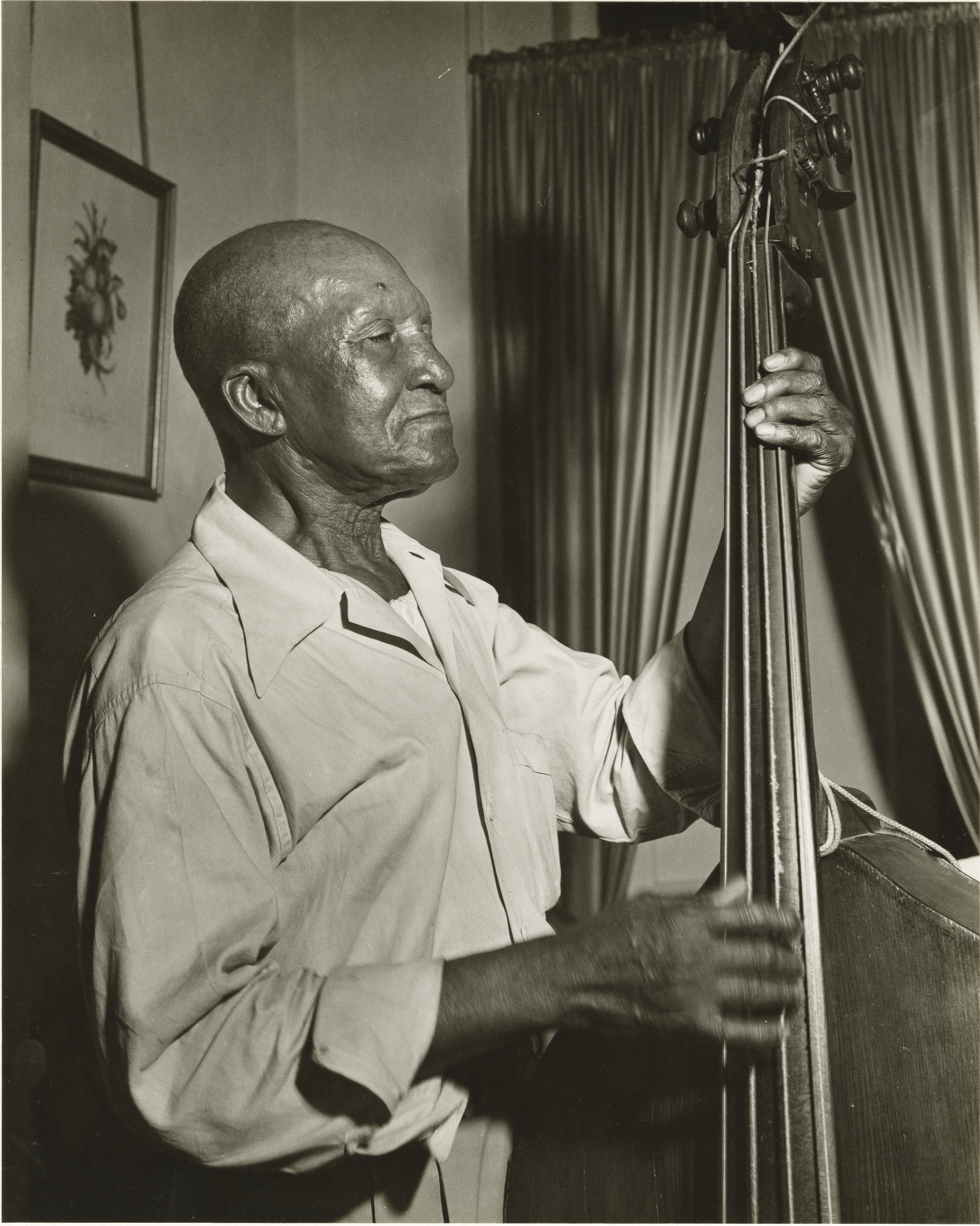
The bassist Albert Glenny (1870 – 1958) shared some details about the dance music featured here from the mid-1890s to the early 1900s, a pivotal period in the inception of jazz. In a 1957 interview, he recalled playing waltzes, schottisches, quadrilles, and, for more intimate dancing, slow drags.
Glenny said that he played on Franklin Street for “twelve years, every night.” His first gig was at place called the Pig Ankle, but he “was playing bass so good” that “Johnny the Greek,” whose hall was directly across the street, poached him by upping Glenny’s nightly wage to a dollar and a quarter, for playing from 7pm to 2am.
After sitting down with Glenny in 1951, Thomas Sancton reported that Glenny played at John the Greek’s with Buddy Bolden, the cornetist whose bluesy style helped spur the development of jazz. This is consistent with other accounts referenced in Don Marquis’ biography In Search of Buddy Bolden, which have Bolden playing spot gigs around Franklin and Customhouse.
As far as we know, Bolden was not a member of the Greek’s house band, but he had a relationship with Glenny, who spent a few years in Bolden’s own group. Glenny could have tapped Bolden to fill in for a regular at the Greek’s, and/or Strate could have rented his hall to an outside group that hired Bolden’s band while Glenny was in it. Author Al Rose dates Bolden’s appearances here to the 1890s, before the establishment of Storyville, but cites no source.
Strate’s involvement in the musical revolution brewing at his place is unclear, though taking Glenny at his word suggests that Strate recruited specific players with a sound he wanted to cultivate. He held dance parties at his home, as well, which could imply a personal investment in music.
Another suggestion that Strate took an active interest in music turns up in a lawsuit filed in 1893 by the estate of Junius Hart, publisher of the sheet music for, among other popular works, the songs played by the 8th Cavalry Mexican Military band in New Orleans. The existence of the suit implies that Strate had dealings with one of the city’s more prominent music businesses.
Strate may have appreciated Black dance music, but the mainstream press did not. It was more interested in the crime at his place, and found plenty of violent incidents to report.
While this coverage leaned into racist stereotypes, it offered a few fragments of information about who appeared on stage, as when the States wrote about “Albert Lewis, a negro musician” being stabbed “in the chest with a pocket knife” by a woman implied to be a jealous lover. Another article described a violin wielded as a club, a hint about the possible lead instrument of a dance band performing there in 1898.
Strate himself may have had more progressive racial attitudes. He publicly opposed the segregationist Democratic machine that dominated New Orleans politics. And in 1897, as Jim Crow solidified, he rented a room adjoining the dance hall to a Black “political and social club, known as El Recreo,” according to the police superintendent, who sent officers to investigate.
As author Emily Epstein Landau details, “racial segregation and the segregation of vice were two sides of the same coin in late nineteenth-century New Orleans.” 1897 was also the year when city officials drew the boundaries of Storyville around the Franklin Street “dives,” since the area was already stigmatized as a place of moral degradation. The designation was a boon to Strate’s bottom line: In addition to the dance hall, he reportedly owned “houses of ill fame” around the corner on Basin Street.
In 1901, the city stepped up its raids on “honky tonks” including the Greek’s, and shut down the music long enough for Strate to look into opening a new dance hall Uptown, according to the Times-Picayune.
Though he began as an outsider and faced persistent pushback from the authorities, over time Strate’s financial success in the district elevated his social standing. He bought a nice house in Treme, a summer home in Biloxi, a horse at the Fair Grounds.
When he died in 1903, the States called him “Big-hearted, kind and generous,” and noted that “they are many who owe to him their start in life, many who are today successful in business.” Nine years earlier, the same paper wished his “vile negro den of perdition” had burned to the ground.
When the Greek’s place went up for sale the following year, it was listed as “the Most Valuable Property in the Tenderloin District.”
Marshall Kizer, Gus Goday, and musical evolution in the new century
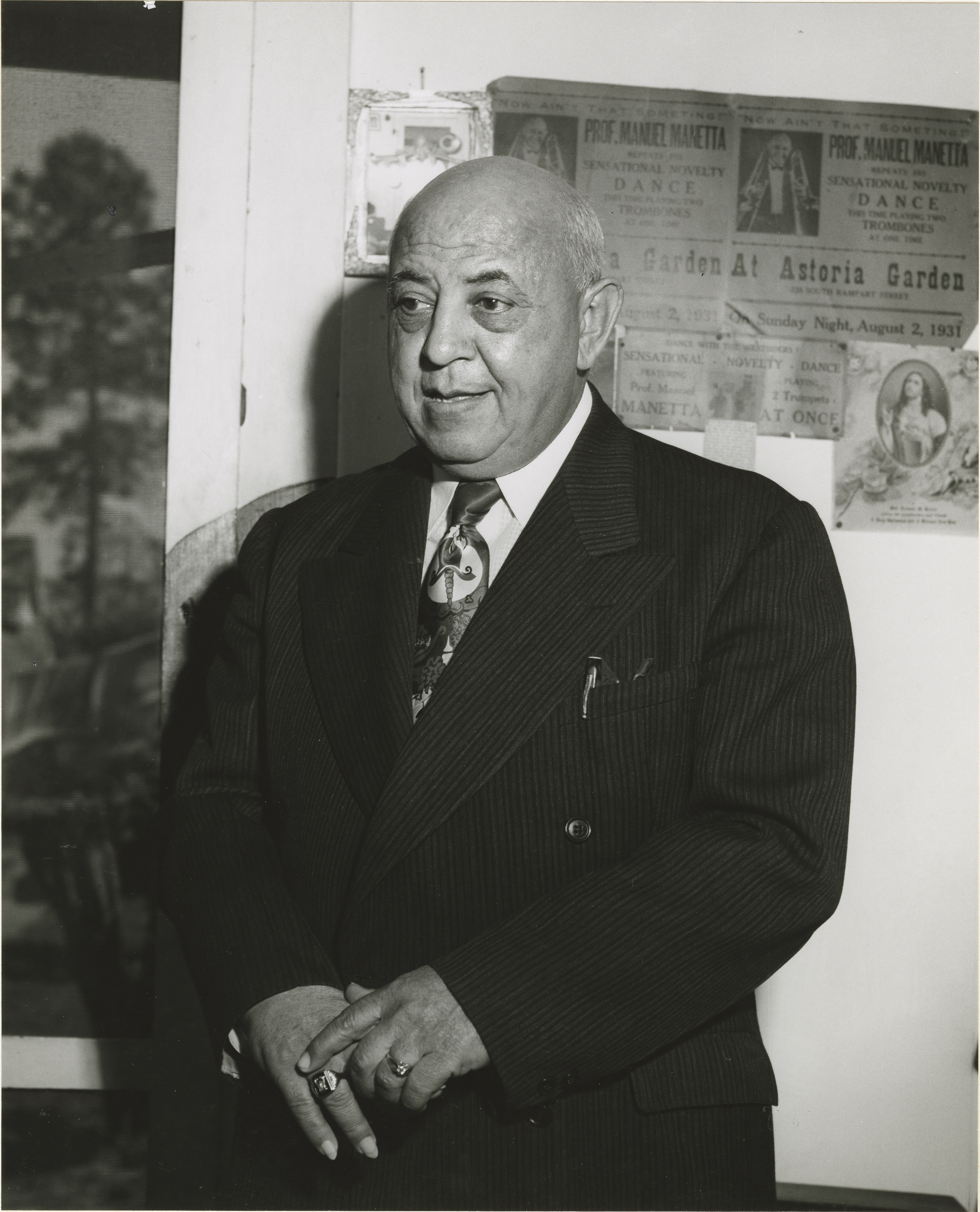
Manuel “Fess” Manetta, who played piano in the district’s high-end bordellos and piano and other instruments in its honky tonks, recalled playing here in 1905 with clarinetist Wille Humphrey, Sr. and bassist Eddie Dawson.
While this date cannot be confirmed, Manetta was not alone in remembering smaller string bands here in the period after Strate’s death. Importantly in the evolution of jazz, brass instruments became more prominent later in the decade. The transition played out in this venue, though accounts vary as to how.
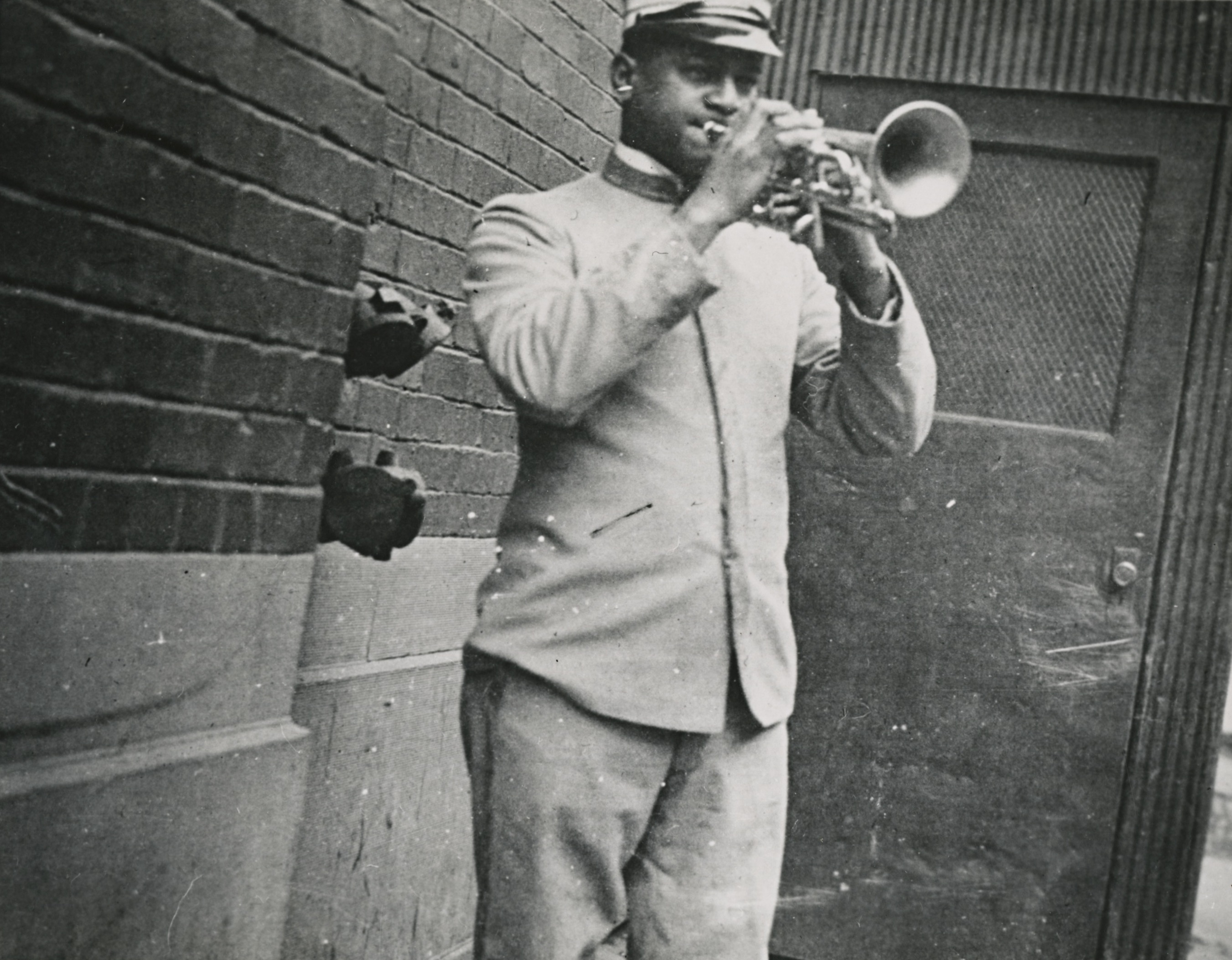
The story that aligns best with documentary evidence came from multi-instrumentalist Manny Gabriel (who is the father of Preservation Hall Jazz Band clarinetist Charlie Gabriel). Gabriel said that his father, Martin Joseph Gabriel, played accordion here for proprietor Marshall Kizer, in a small group with Freddie Keppard on violin. After hearing Manuel Perez on cornet across the street, Kizer bought one for his father to play here, but his father didn’t take to it. Keppard was honing his cornet skills around the same time, though, and quickly distinguished himself on the instrument.
Kizer had the place from roughly 1907 until early 1909, when Keppard gained prominence as a cornetist in the Olympia Orchestra. After Bolden’s career came to a tragic end in 1907 due to mental illness, Keppard emerged as New Orleans’ new cornet “king.”
In the seminal book Jazzmen, William Russell and Stephen W. Smith refer to the proprietor as “Kyser,” and to the venue as “the old 28 Club.” They wrote, “if anyone sat down at the piano in the 28 Club, he knew he’d better not play anything else but the blues. In these dives they dragged out the blues with a slow beat and fierce intensity.”
Russell and Smith went on: “One night a week, as a special added attraction, the 28 Club put on a ‘ham kick.’” Ham kicks were competitions in the district in which a ham was strung up from the rafters, and women, sans undergarments, attempted to kick it over their heads, to the delight of onlookers. Whoever booted the pork at its apex took it home as a prize.
Kizer’s tenure at the club came to an end after repeated raids by the police. Kizer had been a detective himself, but was kicked off the force for gross corruption. When he transitioned into the honky tonk game, his former colleagues “drove him out of the business,” according to the Times Picayune. (Kizer left town and operated a saloon in Bogalusa, Louisiana for about six months before he was shot and killed by a customer.)
By the summer of 1909 a seemingly respectable businessman named Gus Goday took over the dance hall, but he ran afoul of the law, too.
In March 1910, a missing 16-year-old girl turned up in the venue, prompting authorities to pull its “all-night permit,” and arraign Goday for violations of the Gay-Shattuck Act, a law meant to impose reformers’ moral order on nightlife in Louisiana. Goday was charged with “having musical instruments in his saloon,” and with setting aside space where women could drink liquor. He was convicted of the latter, and the business went up for sale again.
Goday was active in the local Democratic Party, and, years later, intra-party opponents including New Orleans Mayor Martin Behrman tried to hang his association with the club around his neck—at that point, “101 Ranch” was shorthand for the depravity of the underworld. But it was the proprietors after Goday, known as Charles and Harry Parker, who were responsible for that.
The 101 Ranch, the 102 Ranch, and the double homicide
The Parkers appear to have named the place 101 Ranch after a Wild West show that visited New Orleans in 1908 and 1910 (“the most remarkable amusement institution in the history of outdoor spectacle,” according to the Times-Picayune). Associating themselves with the Wild West was apt, as the Parkers operated with brazen lawlessness, even by Storyville standards.
Nevertheless, Harry Parker hired some of the city’s top musical talent to keep the dance floor crowded. In this period, larger bands with more horns provided the soundtrack for a new generation of dances, including the so-called “animal dances” like the the Grizzly Bear, the Turkey Trot, and the Bunny Hug, which brought couples into scandalously close contact.
Cornetist Joe Oliver played here when he was just beginning to make a name for himself. Soon he would rival Keppard, mentor a young Louis Armstrong, and become a famous bandleader and recording artist.
Violinist Jimmy Palao led a band here, too. He likely taught Bolden early in his career, and would soon lead the Creole Band, featuring Keppard, on nationally influential tours. Clarinetist Lawrence Duhé, a veteran of Kid Ory’s group, led another outfit.
As is still often the case on New Orleans bandstands, musicians at the 101 Ranch collaborated freely, performing in shifting combinations. After playing here in a small group after John the Greek’s death, Manetta said he was back with a different band in this period.
In 1912, the Parkers sold the business to a veteran saloonkeeper named Billy Phillips, and reportedly agreed not to open a competing establishment, but did just that, directly across Franklin Street.
The Parkers were gangsters from New York who’d shouldered their way into Storyville under assumed names. They renovated their new place, the Tuxedo Dance Hall, to attract the biggest players in the district, and Harry Parker tapped Manetta to assemble its best musicians as a new house band, which soon included the charismatic front man Oscar “Papa” Celestin.
Billy Phillips didn’t take kindly to the poaching, or the deception (some sources say he’d been a minority partner of the Parkers in the 101 Ranch, which would have only intensified the betrayal). He and Harry Parker reportedly came to blows a few times in late 1912 and early 1913, with Phillips, who stood all of 5 feet 4 inches, getting the best of the young New Yorker. “He was a scrapper,” Manetta remembered.
Phillips changed the name of his establishment to the 102 Ranch (though it would often be remembered as the 101). He also booked top shelf dance bands. Musicologist Charles Kinzer suggested that he engaged in a kind of musical arms race with his rivals across the street, putting together a group inculding Keppard, Palao, and trombonist William “Bébé” Ridgley (the great-uncle of R&B singers Tommy Ridgley and Sammy Ridgley) to compete with the Tuxedo band.
Phillips also booked the Crescent Orchestra led by trombonist Jack Carey, with his younger brother Thomas “Mutt” Carey on cornet. As Mutt Carey recalled, “My first job was in Billy Phillips’ place. We played anything we pleased in that joint; you see, there was no class in those places. All they wanted was continuous music. Man, they had some rough places in Storyville in those days. A guy would see everything in those joints and it was all dirty.”
Indeed, on Easter Monday 1913 the dirt spilled onto front pages across New Orleans. Late the night before, some of Phillips’ employees visited the Tuxeo, and Harry Parker roughed them up. Phillips then went there himself. Some accounts had him returning with his friend Anthony Batistina, proprietor of the White Rock Saloon at the end of the block, who carried a gun. Batistina denied this.
There was a wide consensus about what happened Inside the Tuxedo, though: An enforcer of the Parkers’ from New York called Gyp the Blood shot and fatally wounded Phillips, touching off a firefight in the Tuxedo’s saloon that killed Harry Parker and wounded his brother. As the Tuxedo filled with smoke, Manetta and a few other musicians escaped through a back door.
Music in the aftermath of the shooting
After the shooting, the city shut down every dance hall in the district.
Ed “Montudie” Garland, then a teenaged bassist, played with Keppard and with Oliver at 101 Ranch. Decades later, he said, “During this slow period, Freddie Keppard fired his bass, guitar, and violin [players] and hired Buddy Christian to play piano with him. As far as I know, this was the first time a piano was used in a jazz band.”
Setting aside the unanswerable question of who actually played piano in a jazz band for the first time, Garland’s remark shows that the closure of Storyville dance halls reconfigured its music scene.
While bands changed personnel, so did the clubs. A shady character named Harry Brooks, who’d helped the Parkers open the Tuxedo, assumed control of the venue, renaming it the Villa. Batistina, whom a grand jury declined to indict for Parker’s murder, left his saloon at Franklin and Bienville to take over the 102 Ranch.
In 1914, Batistina and Brooks resumed their establishments’ musical rivalry. Brooks retained Manetta at the Villa, probably with Celestin, and hired Duhé’s band, veterans of the 101 Ranch. But the following year, with Brooks attracting attention from law enforcement in the wake of the shooting, Batistina lured Celestin to his place.
Celestin and a couple of other familiar faces from the Tuxedo joined Ridgley in a new group at the 102 Ranch, which appropriated the name Tuxedo Jazz Band (the Tuxedo band, still active today, is the longest-running jazz band in history). Ridgley recalled that this became a steady residency (“tips were good”).
The bassist Garland recalled, “The man who took over the 101 Ranch wanted to change things, so he…hired a bunch of young white musicians…Later they went to Chicago and became very famous as the Original Dixieland Jazz Band.”
Jazzmen portrays an agent’s visit to the venue in 1916 as the impetus for Alcide Nunez, Henry Ragas, and Johnny Stein to form the Original Dixieland Jass Band for the gig in Chicago, but author Samuel Charters points out that a few of the people involved have disputed this story.
In any event, it’s notable that Batistina brought white musicians to the bandstand here. He left the business not too long afterward, and, after surviving the feud with the Parkers, died of liver disease in 1917.
Among the more consequential ripple effects of the gunfight was the momentum it gave to reformers’ efforts to crack down on the nightlife of New Orleans.
The last proprietor of the 102 Ranch was Henry Arnold, who, in March 1917, was one of “the eight saloonkeepers whose indictment by [a] grand jury for alleged violations of the Sunday law resulted from the recent moral crusade,” the States reported. The District Attorney punted that case, but the crusaders won a much larger victory later that year, when, thanks to pressure from the federal government, the city re-criminalized vice in the district.
While the policy once again transformed the neighborhood, the music on Franklin Street didn’t begin or end with a declaration from City Hall. The Greek’s old dance hall still had one more chapter.
The Entertainers
The venue may have gone dark for a time between the demise of Storyville and the early years of Prohibition, but by 1925 it was in full swing as The Entertainers under proprietor Johnny Lala. Not to be confused with the trumpeter also named Johnny Lala (who said he was a “distant cousin”), this Lala used to run Big 25, the primary rendezvous for musicians in the district, on the uptown-lakeside corner of Franklin and Customhouse.
Lala appears to have continued making musicians comfortable at his new place. According to banjoist Emanuel Sayles, “All the musicians used to go there to jam…Us musicians used to almost hibernate around there.” John Handy remarked that, as was the case in the hall’s early years, the dance floor was racially mixed: “All creeds and colors came there.”
Around 1925, when trumpeter Lee Collins returned to New Orleans after a stint with Joe Oliver’s band in Chicago, Lala booked him here. As Collins recounted, “I went to work with a four-piece band at the Entertainers Club, the old 101 Ranch, and stayed there over a year…We were the talk of New Orleans and packed every night.”
While the sex trade was less conspicuous to the general public after 1917, it wasn’t far from the surface. According to Collins, “The manager at the Entertainers then was Morris Smith, a well-known pimp…He always had a cigarette in a long, gold-tipped holder, a gold toothpick in his vest pocket, a diamond stickpin, and diamond cuff links.”
In this period, some of the old Storyville nightlife migrated to the Tango Belt, an adjacent entertainment district on the riverside of Basin Street, around the edge of the French Quarter. Among its attractions was the Lyric Theater, a Black vaudeville house that attracted talent from across the country. Collins recalled, “All the show people from the Lyric Theater were going to the Entertainers, and with all those celebrities you could hardly get in the place.”
Hot as it was, Lala told Collins to take a hiatus after an incident outside the club one night. According to Collins, he ended a relationship with a woman named Albertine, and she responded by unloading a .38 at him. Collins wasn’t hit, but Lala “was afraid that Albertine would kill me there and get his place closed up.”
In 1929 cornetist and bandleader Buddy Petit headlined the Entertainers. He never recorded, and died young, but his playing reverberated among New Orleans musicians. Edmond Hall called him “a real leader who set the pace for a lot of the other bands.” Danny Barker said that “A dozen books should have been written about Buddy Petit.”
In 1934 new owners renovated the place. “It is their intention to revive the old landmark with high-class entertainment,” the Louisiana Weekly reported. “The doors are never closed, and there is music every night.”
The synergy between dancers and musicians at the hall was the same as ever, but, by this time, popular taste had moved on from animal dances to the Lindy Hop.
One of the club’s marquee performers in this period was pianist and bandleader Joe Robichaux, who, Samuel Charters writes, “organized the most successful large swing group in New Orleans in the 1930s.” Charters went on:
Robichaux assembled his swing group for The Entertainers…Robichaux’s band…played with an easy brilliance that caught the essence of the New Orleans style, at the same time moving it into the contemporary dance mode…with Robichaux’s supple piano setting the rhythms the band had an easy, infections swing.
By 1936 Robichaux’s band included trombonist Waldren “Frog” Joseph (father of sousaphonist Kirk Joseph and trombonist Charles Joseph), who went on to record with 101 Ranch veteran Paul Barbarin during the midcentury traditional jazz revival.
Willie Humphrey’s Orchestra appeared here in the club’s late years as well, three decades after his father, also a clarinetist named Willie Humphrey, took the stage in a small combo with Manuel Manetta. The younger Humphrey became internationally known in the 1960s as co-leader of the Preservation Hall Jazz Band.
Remarkably, one musician carried the legacy of this venue as far as 2014. Trumpeter Lionel Ferbos performed in the dance hall half a century after John the Greek established it, and lived to be the oldest jazz musician in New Orleans, dying at age 103.
The Entertainers closed in 1936, and the Louisiana Weekly printed rumors of it reopening, but that may not have happened. Records show that Johnny Lala’s brother Theodore sold the adjoining corner structure—once the Greek’s grocery store—in 1937.
The Entertainers’ façade was still standing in 1942, but by then the neighborhood had transformed again. The city bulldozed the entire district, except for this block and one other one, and built the Iberville Public Housing Development on its footprint. The project, financed through the New Deal, allowed city leaders to achieve their long-desired goal of segregating the area: the new apartments were reserved for white tenants only.
Videos
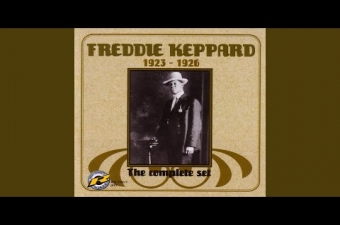
"Freddie Keppard 1923-1926 The Complete Set" is a compilation of Keppard's audio recordings.
Provided to YouTube by The Orchard Enterprises.
"Freddie Keppard 1923-1926 The Complete Set" is a compilation of Keppard's audio recordings.
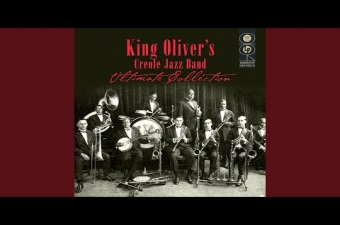
"King Oliver's Creole Jazz Band Ultimate Collection" is a compilation of audio recordings by Oliver's band.
Provided to YouTube by The Orchard Enterprises.
"King Oliver's Creole Jazz Band Ultimate Collection" is a compilation of audio recordings by Oliver's band.
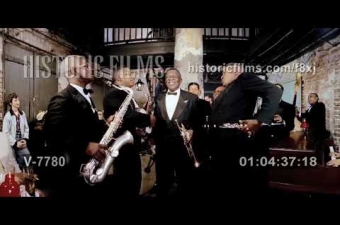
Oscar "Papa" Celestin, leader of the Tuxedo Jazz Band, performing "Tiger Rag" ca. 1954. He left the former Tuxedo Dance Hall for the 102 Ranch around 1914.
Video posted by Historic Films Stock Footage Archive.
Oscar "Papa" Celestin, leader of the Tuxedo Jazz Band, performing "Tiger Rag" ca. 1954. He left the former Tuxedo Dance Hall for the 102 Ranch around 1914.
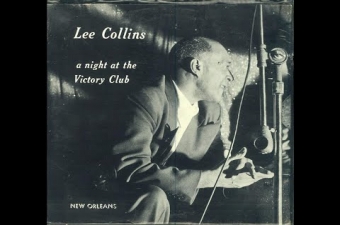
The Lee Collins album "A Night at the Victory Club 1951." Collins headlined The Entertainers in the mid-1920s.
Video posted by Mossy Vinyl Clubhouse.
The Lee Collins album "A Night at the Victory Club 1951." Collins headlined The Entertainers in the mid-1920s.
Images