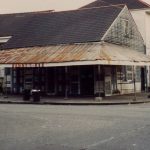
Neville Family Home
1104 ValenceNew Orleans LA 70115
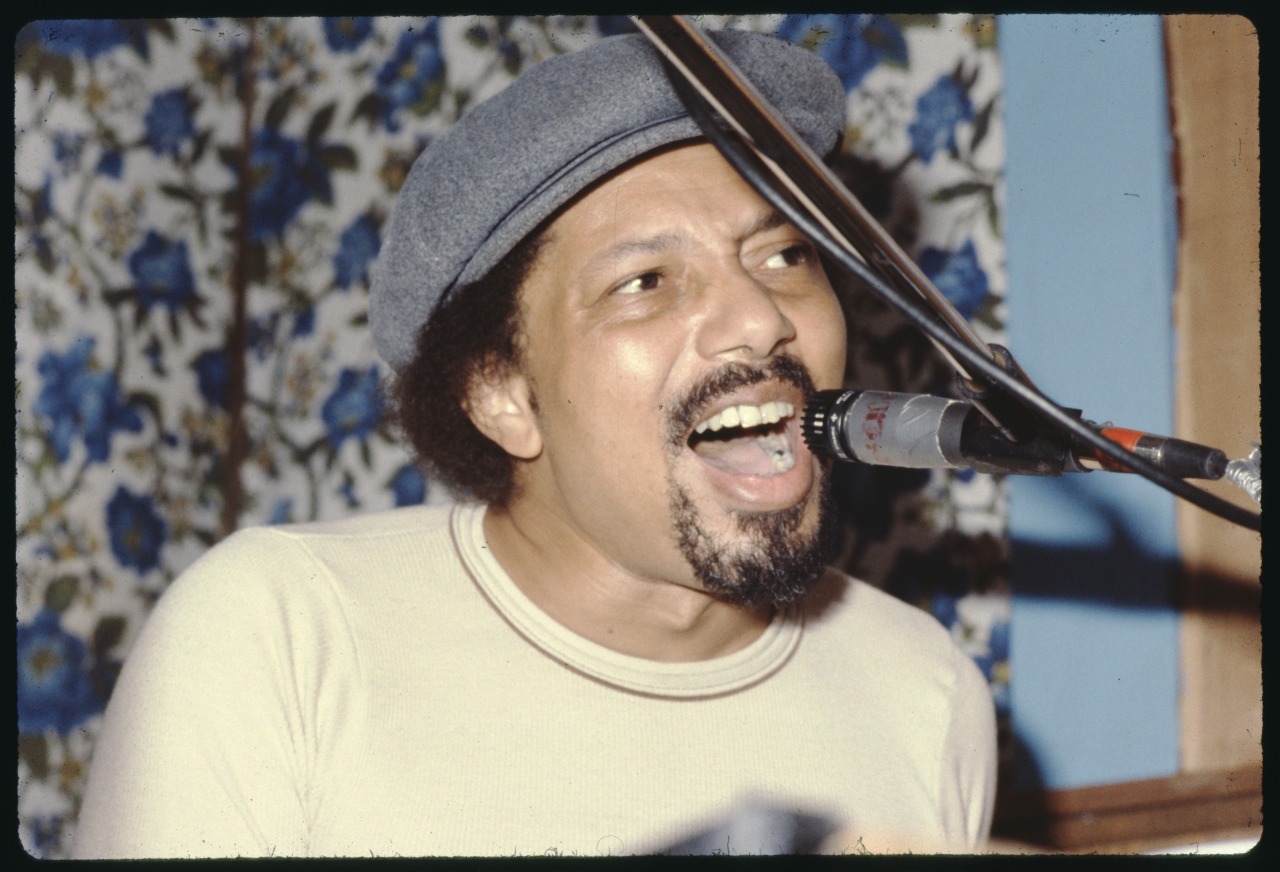
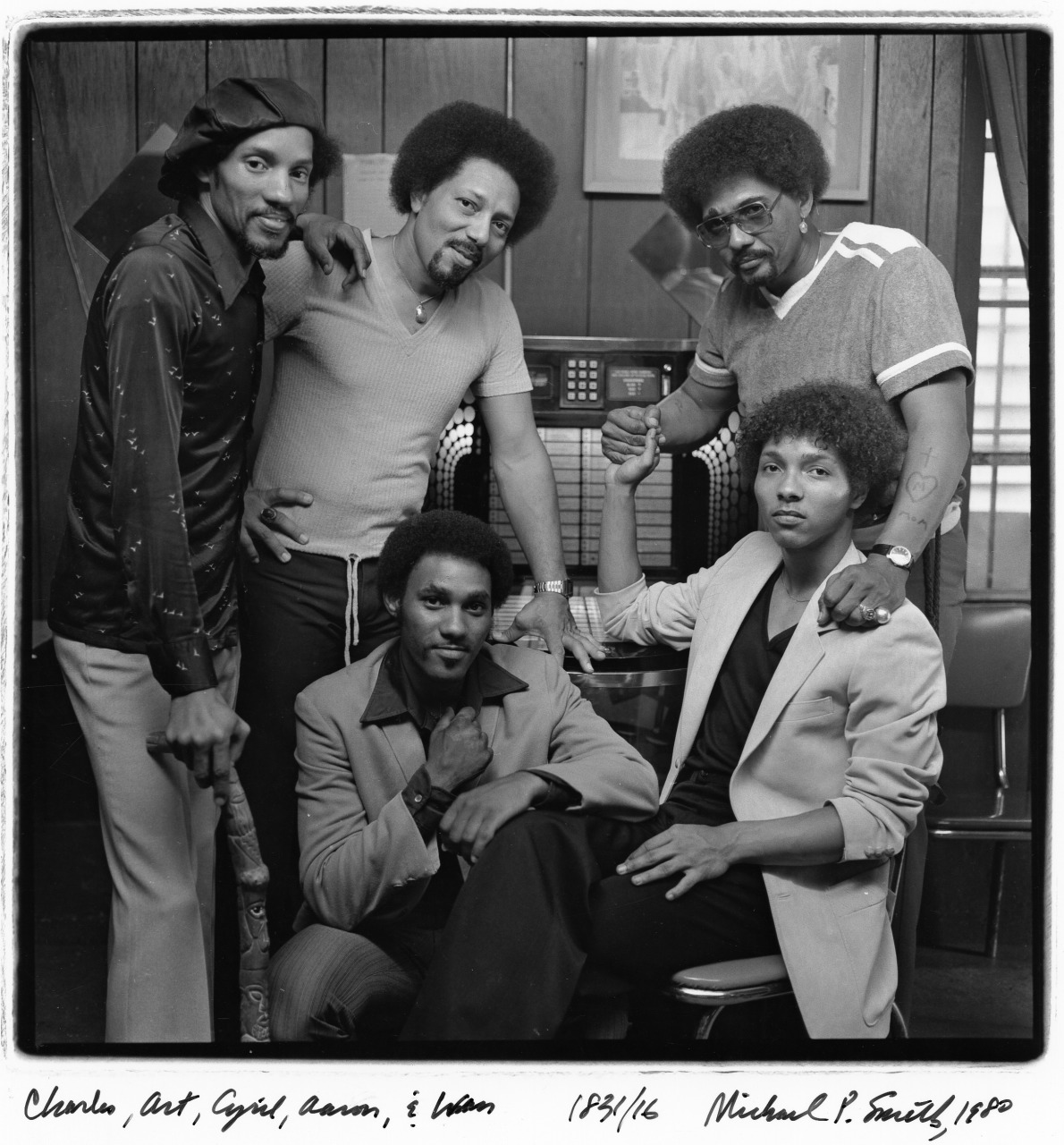
This was one of several houses in the 1000 and 1100 blocks of Valence Street owned and occupied by the Nevilles, among the most important families in postwar New Orleans music. The Neville brothers—Art, Charles, Aaron, and Cyril—moved to 1104 Valence with their parents as teens and school-aged children in 1954. The house served as a base for their musical development and, later, their rise to international success.
Art, the eldest of his siblings, had even earlier memories of life on the street. He was born at 1016 Valence in 1937, and described it in the excellent group memoir The Brothers Neville:
Valence was a cobblestone street made up of shotgun cottages…. There was an outhouse in the back, and we took baths in little galvanized tubs. In those days you’d look for the iceman to come ‘round with ice for your icebox. I’d scrub the splinters out of the hardwood floor with broken pieces of red brick.
Art, Charles, and baby Aaron moved with their parents Arthur Neville, Sr. and Amelia Landry Neville to the newly built Calliope public housing development in 1942—it offered indoor plumbing and modern kitchens otherwise unavailable to many working-class Black New Orleanians at the time.
The family returned to Valence Street 12 years later, moving into half of a shotgun double camelback at 1104 owned by Arthur Sr.’s aunt, Virginia Harris. Auntie Cat, as she was called, cared for children of the wealthy in the nearby Garden District, and her earnings, along with her husband’s carpentry skills, helped establish the extended family in multiple houses on the street.
By June 1954 Arthur Sr. and Amelia’s household had grown to include Athelgra (who would join vocal group the Dixie Cups after their initial breakout), Cyril, and Rowena. Art was 17, and already leading one of the hottest bands in town.
The Hawketts rehearsals
As Art recalled that the new house:
[There were] two big bedrooms upstairs, and downstairs Mommee and Daddy turned the dining room into their bedroom. I was glad to be back with all my aunts and glad to have space to rehearse. By then the Hawkettes were happening…We had John Boudreaux on drums and later Leo Morris, who lived around the corner…In New Orleans, the Hawkettes were the number one band. We played everything—jazz, blues, r&b, you name it. We opened for Louis Jordan at the Booker T. Washington High School auditorium, we opened for Ray Charles…and Nat Cole. We were sharp. We had tailor-made silk shirts, khaki pants with killer creases, and old-man supercomfortable shoes.
The Hawketts’ rehearsals attracted fledgling drummers and percussionists in the neighborhood. Leo Morris, who would change his name to Idris Muhammad and become one of the great drummers of his generation, wrote:
I was fifteen years old and doing the rehearsals ….There was a period when this little kid who was like five or six years old would come by because he could hear the drums and he liked the drums, and he would come up directly to the screen door at the Neville’s house. Zigaboo Modeliste…was in the neighborhood but he wasn’t playing the drums at this time. He would come listen at us rehearsing at Arthur Neville’s house and he would be so interested in what we were doing that he would have the screen door impressed into his forehead when he walked away.
Modeliste would later join Art in the Meters, and become one of the great drummers of his generation.
Cyril was the same age as Modeliste, and used to peep his older brother’s rehearsals through the sliding doors separating the band’s practice space from their parents’ room. “If I was lucky, I’d get to hit the drums,” he wrote.
Cyril also played drums with next-door neighbor Clarence Brown, known as Junie Boy, who went on to drum behind Fats Domino. Cyril later played percussion with the Meters, the Neville Brothers band, and several other outfits.
Music in the neighborhood
Music wasn’t just in the house but all around it, including at several nearby churches attended by the Neville children. As Aaron wrote:
They had an organ at Trinity [Methodist] Church over in the Thirteenth Ward where my great-aunts went, and that’s where Artie fell in love with the sound of the Hammond B3. I remember the first time he touched the organ, it made such a big sound that it scared him.
Three blocks away, Aaron was “mesmerized” by “Ave Maria” in St. Stephen’s Catholic Church, where Black congregants had to sit in a segregated area in the back. The song “done something to my heart,” he told A Closer Walk.
Cyril ducked Catholic mass to visit the Sunlight Baptist Church around the corner from the house:
The tiny building would be rocking from side to side … Talk about making a joyful noise! … There’d be these all-men quartets, cats dressed in matching kelly green suits or cherry red suits or even pink suits, their hair done up in ‘dos, each group trying to outdress the others. Not just outdress but outsing, the congregation standing and shouting and carrying on like Jesus himself had returned live and in person…
Then there were extended family members and neighbors. The house at 1012 Valence, next door to the one where Art and Charles were born, belonged to the brothers’ great aunt Lealah Davis. Besides being reputedly “full of spirits,” the house had an upright piano, on which Art learned to play, family friends including the virtuoso James Booker held court, and the brothers’ revered uncle George Landry pounded a blues style he dubbed “funky knuckle.”
Landry also brought the tambourines and chants of the Mardi Gras Indians (now also called Black Masking Indians) to Valence Street. He began masking in the late 1960s and founded his own tribe in 1974, becoming Big Chief Jolly of the Wild Tchoupitoulas.
In addition to the Indians, Aaron Neville told A Closer Walk that he used to follow brass bands playing funeral processions in the street (many were likely en route from the cluster of churches in the area to the Valence Street Cemetery nine blocks away, with tombs maintained by the Odd Fellows and various benevolent associations).
Carnival brough more brass bands into the street every year, as did the annual second line of the Prince of Wales Social Aid and Pleasure Club, which was based in the 12th Ward, just a few blocks away.
The evolution of the Meters and the Neville Brothers
While Art made a name for himself in the music business in the 1950s, his younger brothers had a longer road to success.
Aaron was working as a longshoreman and fencing cartons of cigarettes in 1965 when he moved with his wife and kids, including six-year-old future musician Ivan, into the house at 1012 Valence. The following year Aaron released a smash record, “Tell It Like It Is,” but his drug addiction and unscrupulous management by Joe Jones left him still scuffling for money.
When that hit petered out, Aaron united with Art and Cyril in a group called the Neville Sounds, sometimes walking from Valence Street to gigs at the Nite Cap. That’s where Art, playing organ, found something special with Zigaboo Modeliste on drums, George Porter, another youngster in the 13th Ward, on bass, and Leo Nocentelli on guitar. The foursome soon evolved into the Meters, one of the most celebrated rhythm sections in popular music.
After a historic run of records with the Meters in the early 1970s, Art moved into a 4,000 square foot house at 1115 Valence, across the street from the shotgun double where the Hawketts used to rehearse.
In 1976, Big Chief Jolly instigated the family’s collaboration on the landmark Wild Tchoupitoulas album, which led to the formation of the Neville Brothers band. Not long after, he was living next door to Aaron as his health began to falter. When he died from cancer in 1980, he was “laid out in an open casket in his Indian” suit at Aaron’s house.
Staying connected to Valence in the 1980s and beyond
After many years in New York, Charles moved back to Virigina Harris’ house on the 1100 block of Valence in the early 1980 as the Neville Brothers gradually built a national following. Sales of their debut album had disappointed, but the group found new audiences as a live act.
Their local following coalesced a few blocks from the Neville houses, at Tipitina’s, then a scrappy upstart club intended to celebrate elder R&B artists. But the venue closed in 1984 amid financial problems (it would reopen in 1986, but no one knew that at the time).
Fearing the loss of neighborhood clubs, Cyril, then living next to Aaron at 1014 Valence, started jamming at a tiny barroom at the corner of Valence and Camp called Benny’s. Between tours with the Neville Brothers, Cyril and the Uptown Allstars helped turn Benny’s into a mecca for music lovers until the mid-1990s.
Over the same period of time, Valence Street suffered from divestment and an influx of crack cocaine. With crime on the rise, Aaron started keeping a gun under the seat of his Thunderbird when he went out at night. In 1991, after a run of successful major label Neville Brothers albums, he and Charles each bought houses elsewhere in New Orleans.
By 1999 Benny’s was shut down and Valence Street wasn’t the musical hive it used to be, but that didn’t diminish its significance to the Neville brothers, who made it the namesake of a new album.
Meanwhile, Art had built a studio upstairs at 1115 Valence, with a view of some trees out the window. As he reflected in 2000:
In wintertime the trees outside my window are bare, but when the spring arrives and the leaves bloom on the branches, one particular tree blossoms into a remarkable form; the tree takes the shape of Uncle Jolly wearing his golden crown and full regalia…His is the spirit of the muse…the spirit that, no matter the obstacle, will keep Cyril, Aaron, Charles, and Art together…forever.
After Hurricane Katrina damaged that house in 2005, Art moved up the block to 1133 Valence. He died there in 2019, a block from the house where was born.
To honor the family’s legacy, the City of New Orleans renamed the 1000 and 1100 blocks of the street Neville Way in 2024.
Videos
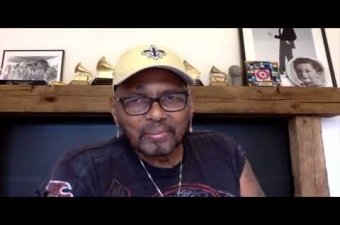
Aaron Neville speaks to A Closer Walk about his formative experiences in the 13th Ward.
Video posted by the Ponderosa Stomp. Editing by e/Prime media.
Aaron Neville speaks to A Closer Walk about his formative experiences in the 13th Ward.
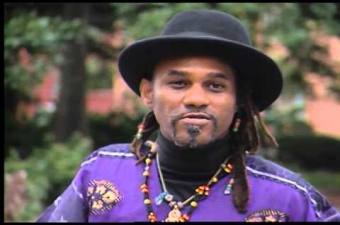
A brief interview with the Neville Brothers in 1991 ahead of a concert at the Municipal Auditorium.
https://www.youtube.com/@NevilleBrothersOnMV
A brief interview with the Neville Brothers in 1991 ahead of a concert at the Municipal Auditorium.
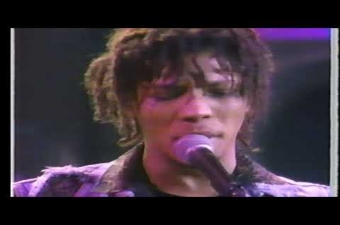
A Neville Brothers televised concert from 1989, as they approached the peak of their national success.
Video posted by Pickanik.
A Neville Brothers televised concert from 1989, as they approached the peak of their national success.
Images