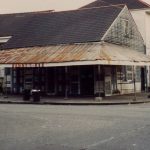
Le Bon Temps Roule/Roppolo residence
4801 Magazine StreetNew Orleans LA 70115
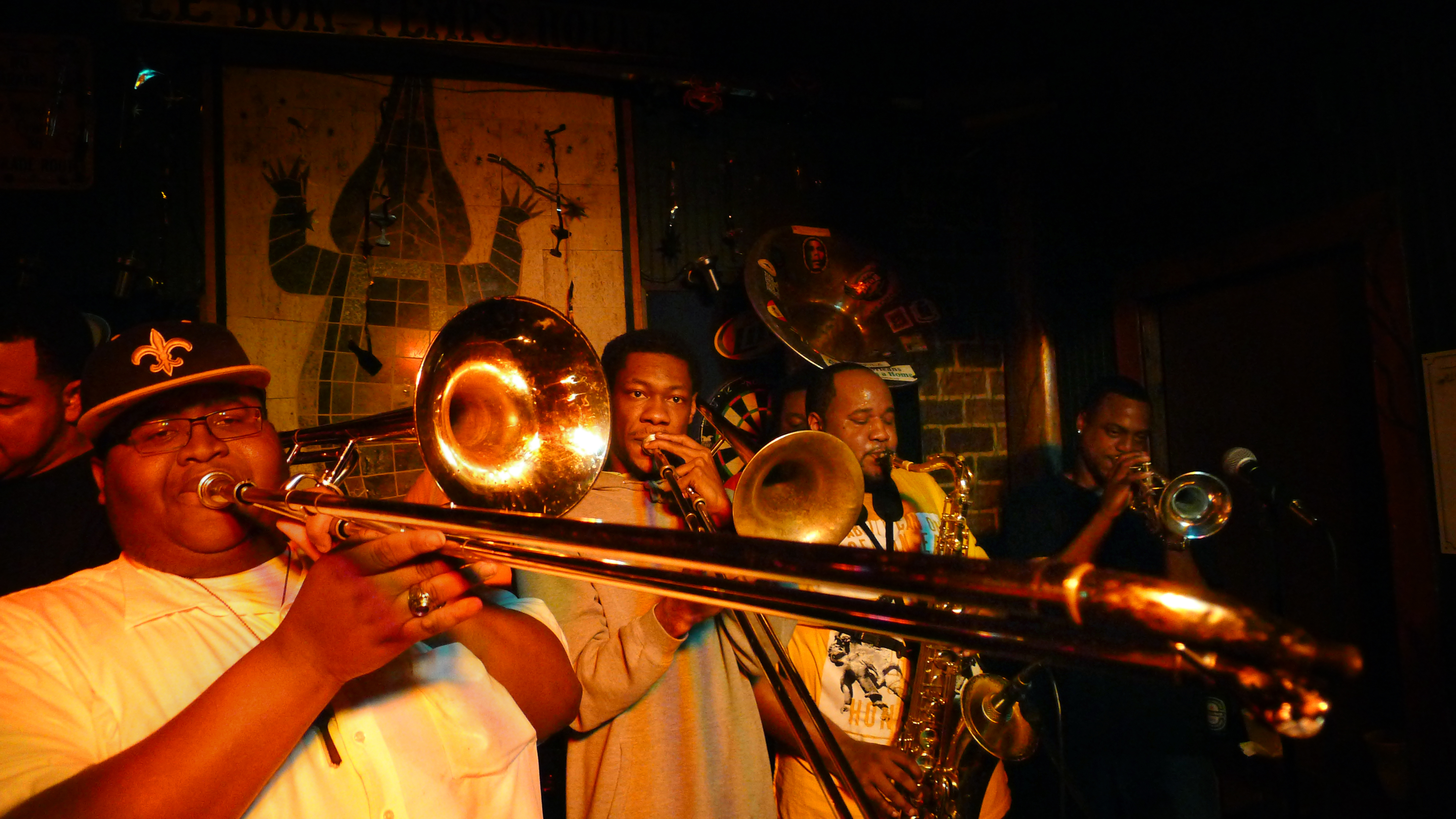
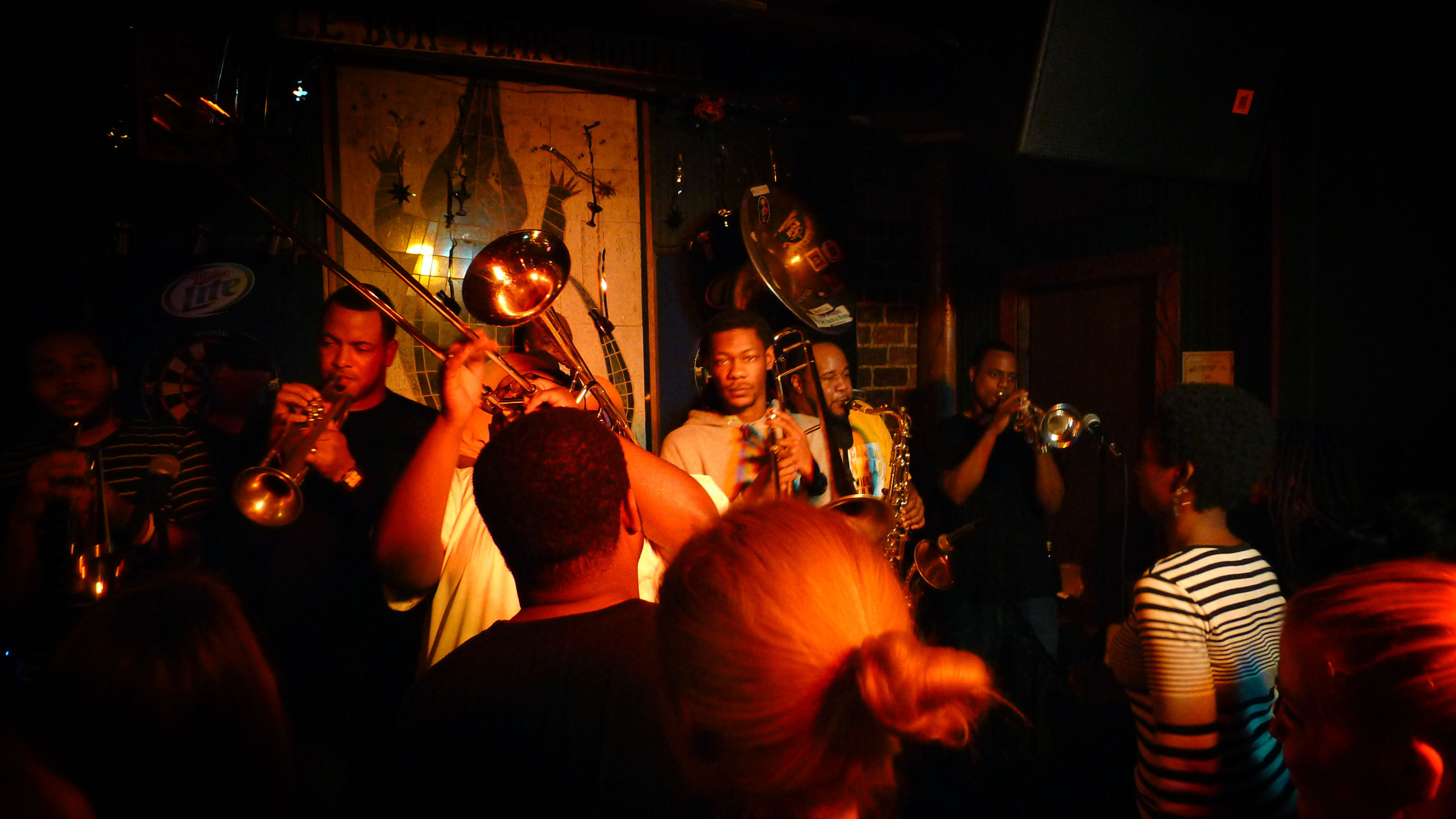
Le Bon Temps Roule, a barroom in the 13th Ward, has presented some of New Orleans’ finest musicians going back to the 1980s. Since 2000, it is best known as the home base of the Soul Rebels, a group that broke out of the brass band scene and won acclaim for its collaborations with some of the biggest names in hip hop and popular music. Less conspicuously, the property’s history also involves a tragic hero of early jazz, Leon Roppolo, and an international star of metal, Pepper Keenan.
The building’s front room, opening onto the corner of Magazine and Bordeaux Streets, has been a no-frills neighborhood bar since the 1940s: pool table, juke box, a couple of booths, a handful of stools, and a small kitchen.
Ned Hobgood, a DJ and rock musician out of Meridian, Mississippi, took the place over in 1979 and called it Le Bon Temps Roule (the name is liberally rendered French for “Let the Good Times Roll”).
Live music appeared as early as 1981, when Wavelength characterized its offerings as “folk, bluegrass, country, jug bands.”
Later in the 80s, the cheap drinks and free oysters on Friday nights made Le Bon Temps a popular stop before late-night shows at Benny’s Bar around the corner.
Around 1995, according to author Jay Mazza, Le Bon Temps “started presenting bands for the first time in their recently renovated back room.” Bookings in this period favored more blues-based music, particularly artists like Walter “Wolfman” Washington, Sunpie Barnes, J.D. and the Jammers, J. Monque’D, and Paula and the Pontiacs, whose regular gigs at Benny’s were then at risk from that club’s periodic closures. In the mid-90s, Mazza writes, the appearance of “the same or similar acts” at this pair of venues created “an intimate walking scene between the two.”
Later in the 90s, trumpeter Kermit Ruffins began performing at Le Bon Temps every Wednesday night. In the era of the movie “Coyote Ugly,” his sets often culminated with young women dancing on the bar.
The success of Ruffins and some of the city’s younger brass bands, such as the Lil Rascals and Coolbone, opened the door in 2000 for a residency that became a New Orleans institution.
The Soul Rebels
While the Soul Rebels toured the world and played with everyone from Metallica to the Wu Tang Clan, they have maintained their Thursday night gig at Le Bon Temps (as of this writing, the engagement has lasted a quarter of a century).
Members of the group began playing together in the Young Olympia Brass Band in the late 1980s, under the guidance of the Olympia Brass Band’s Milton Batiste. As Lumar LeBlanc told musicologist Matt Sakakeeny, the group learned the brass band tradition “like a passed-down folk tale from the actual people” who defined it.
But the youngsters soon looked to infuse their music with a range of other sounds, most notably hip hop, and, per LeBlanc, “evolve from the street to the stage.”
Another mentor, Cyril Neville, encouraged this development. He tapped some members of the group to play horns on a 1991 track, “Running with the Second Line,” that was probably the first recording to include rapping over a brass band performance. Later that year, he helped launch the group by naming them the Soul Rebels, and having them open for the Neville Brothers at Tipitina’s.
Led initially by Mervin “Kid Merv” Campbell and Byron “Flee” Bernard, the group kept one foot squarely in the brass band idiom. When they began a regular Friday night gig at Donna’s Bar and Grill in 1994, they opened with a traditional set wearing suits and caps before playing a second, modern set in fatigues and boots.
Things changed after their debut single, “Let Your Mind Be Free,” caught fire. A politically conscious response to New Orleans’ surging murder rate and geopolitical conflicts of the day, the track incorporates elements of hip hop and reggae, and raised the ceiling on the band’s commercial potential.
In the ensuing years, Campbell left to pursue a solo career and snare drummer Lumar LeBlanc assumed leadership of the group. In 1998 they leaned further into hip hop on the pointedly titled album “No More Parades.”
While even old-line brass bands like the Olympia had incorporated elements of R&B, the Soul Rebels crossed a line for traditionalists. Writing about her namesake bar and grill, Donna Poniatowski Sims recalled, “that style of rap just did not speak to Donna’s audience.”
Assessing the group’s approach, Sakakeeny, the musicologist, wrote:
The Soul Rebels have brought a new set of priorities to the brass band tradition by constructing songs that are intentionally produced for recordings and amplified performances. The pace of marching in the streets is not a factor when choosing tempos. Spoken-word raps float over horn lines played at full volume with the knowledge that they can be reproduced live with the aid of amplification….
After parting ways with Donna’s, the Soul Rebels plugged in at Le Bon Temps, where university students, neighborhood regulars, and assorted party people packed the dance floor into the wee hours of Friday mornings.
The gig continued after Hurricane Katrina, with LeBlanc and trumpeter Marcus Hubbard commuting from Houston, where they settled with their families.
Throughout the 2010s, the Soul Rebels—skilled arrangers after studying music in college—carved out a niche as an ace backing band for special performances by A-list artists. The list of rappers they collaborated with—including Rakim, Slick Rick, Melle Mel, Nas, and The Lox, could fill a hall of fame. Beyond hip-hop, they’ve played with artists as diverse as Katy Perry, Green Day, and Ed Sheeran.
Between appearing on NPR’s Tiny Desk with GZA from the Wu Tang Clan and in a Japanese stadium with Macklemore, the Soul Rebels found value in continuing to play at Le Bon Temps. As Hubbard explained to Gulflive.com:
A lot of people still ask us, ‘Man, y’all do all of this big stuff. Why do y’all still do that little bar?’ And we tell people, ‘This basically is like our house.’ You get to try out all kinds of different ideas…A lot of stuff is tested out before we actually bring it out on tour. And then it’s like, it’s a real intimate setting. We love being able to be right close to the crowd.
Pepper Keenan and the post-Katrina revival
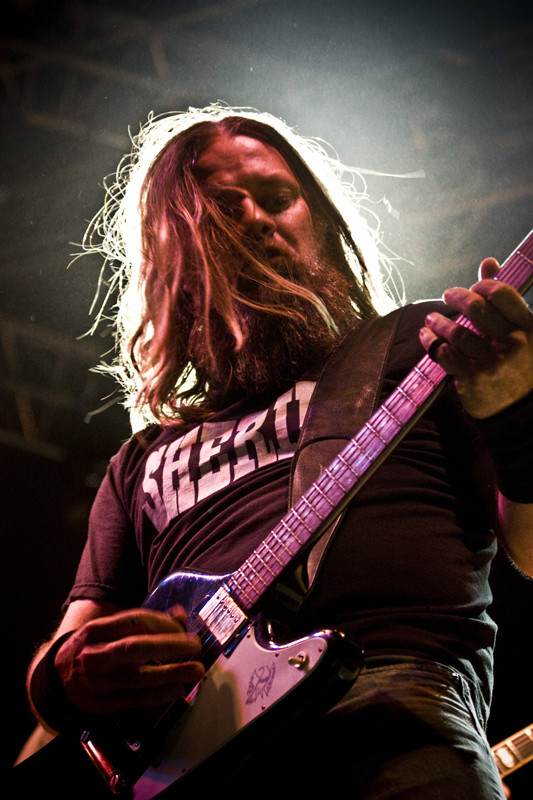
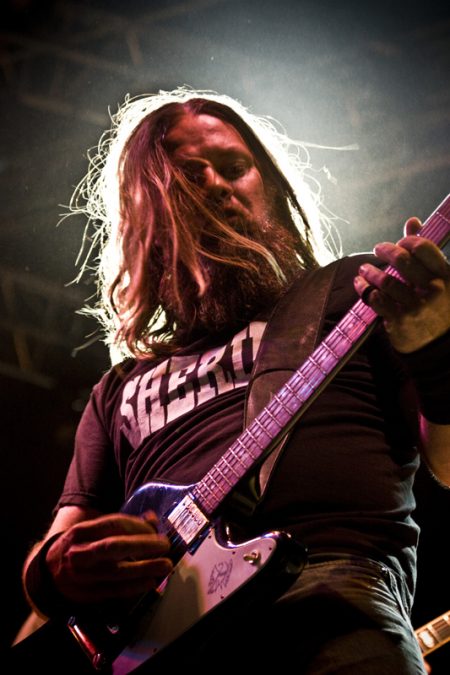
Le Bon Temps has also been a second home for another globe-trotting artist, metal guitarist and vocalist Pepper Keenan, who bought the business in 2003.
The son of a “Finger Picking Martin Guitar Slinger” and “Singer” from Tennessee, Keenan grew up in Uptown New Orleans and played in the city’s heavy music scene in the 1980s before raising his profile as the frontman for North Carolina-based Corrosion Of Conformity. He is also a founding member of metal supergroup Down, comprised of musicians from New Orleans (their 1995 debut album, “NOLA,” was an underground favorite that reached the Billboard charts).
While Keenan played to rabid fans around the world, back in New Orleans he was a low-key regular at Le Bon Temps. He took over the bar as Magazine Street was gentrifying, with an eye on preserving it. As he told the Times-Picayune:
Le Bon Temps is a classic New Orleans joint. Those places are few and far between. With what’s been going on on Magazine Street, I was scared that someone might turn it into a tapas restaurant or something. If we do anything to it, it will be more of a New Orleans joint than it is, and keep it as an outlet for New Orleans music.
Indeed, the live music rolled on, including appearances by Black Masking Indians on the Sunday morning before Mardi Gras Day.
Katrina hit two years later, and, while the bar didn’t flood, it was ransacked in the ensuing chaos. With the city’s future in doubt, Keenan didn’t hesitate to get Le Bon Temps back up and running, as he recounted in the documentary “NOLA: Life, Death and Heavy Blues from the Bayou”:
This bar was one of the first places to open [after the flood]. We came back and got our power hooked up, we ran the main power lines ourselves. Got it running here and starting having bands in here and people were just coming back to New Orleans and musicians didn’t have shit, man. I had a couple guitars laying around and somebody borrowed a drum kit and they just started…. First time live music was played here, people were crying their fucking eyes out, man, because they didn’t think it was gonna happen.
If a guest host of MTV’s “Headbanger’s Ball” made an unlikely champion of New Orleans roots music, Keenan considers his brand of metal to be indebted to the sounds of the city. The Meters, three-fourths of whom grew up within blocks of Le Bon Temps, were a “huge influence on me,” he said.
Describing metal from New Orleans, Keenan said, “Slippery, I think would be a key word. There’s gonna be some semblance of funkiness.” This extends to metal drummers from the city, whose signature approach is playing “behind the beat,” not unlike Meters drummer Zigaboo Modeliste.
The link between traditional “New Orleans” music and the city’s brand of metal is embodied in drummer Stanton Moore. Hailed as an inheritor of Modeliste’s legacy for his work in Galactic, Moore was also tapped by Keenan to supply beats for Corrosion of Conformity.
Roppolo store and residence
While Keenan’s affiliation with Le Bon Temps makes the building a point of interest for metalheads, an earlier chapter of its history attracts traditional jazz buffs.
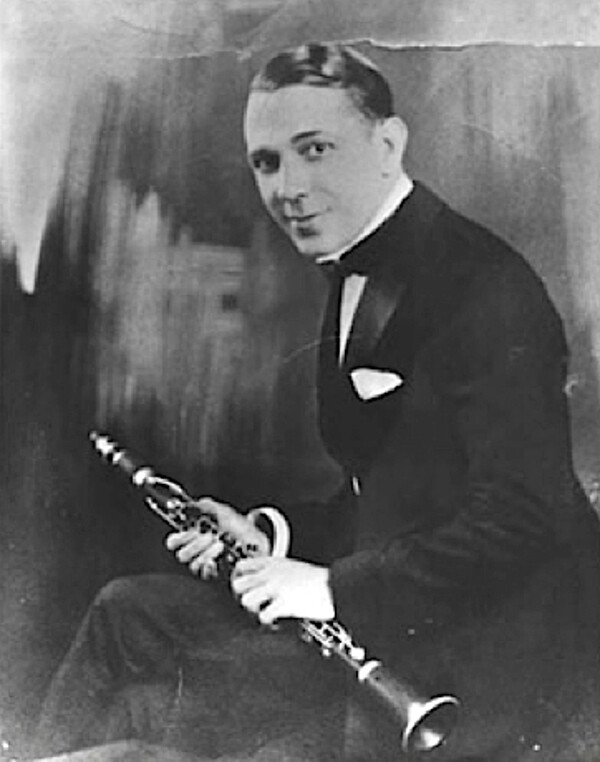
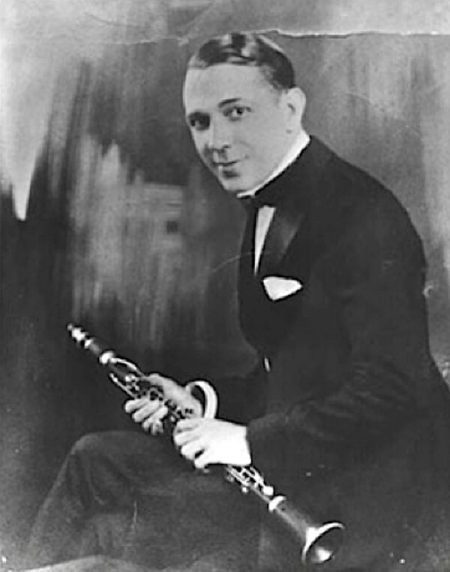
Leon Joseph Roppolo was an influential early jazz clarinetist whose recordings with the New Orleans Rhythm Kings made him one of the genre’s first star soloists. His career started when he was a teenager living with his family in the cottage adjacent to the Bon Temps building at 914 Bordeaux Street.
The Roppolos were there because, in the late 1910s and early 1920s, the Bon Temps building was a grocery store run by Leon’s father, Epifanio, a second-generation classical clarinetist from Sicily.
According to author Charles Edward Smith, Leon started violin lessons with a Black professor as a ten-year-old in 1912. But violinists didn’t play in parades, so when Epifanio was out of earshot, Leon started playing his father’s clarinet.
As a teenager, reportedly to Epifanio’s chagrin, Leon went on tour with a band backing vaudeville “Shimmy Queen” Bee Palmer. In Chicago in 1921 he landed a gig at the Friars’ Inn with a group dubbed the New Orleans Rhythm Kings.
When they weren’t on stage, the putative monarchs paid special attention to shows by New Orleans veteran Joe “King” Oliver’s band, then appearing in Chicago with Louis Armstrong in a supporting role. Armstrong authority Ricky Riccardi writes that Armstrong was initially leery of white artists biting his style, but, taking cues from Oliver, he forged a relationship with Roppolo and his bandmates.
When the New Orleans Rhythm Kings got an opportunity to record, Armstrong let them rehearse at his home. Roppolo’s work on these sessions would be an early entry in the recorded canon of jazz. According to author Samuel Charters:
Some of his solos were so unique that the band turned them into arrangements as compositions on their own…. When they arranged Roppolo’s solo melody as “Farewell Blues” they tried to work the feeling of a train whistle into the harmonization of the first chorus, and the distinctive voicing they crated turned up in the later composition “Mood Indigo” by Duke Ellington, who adopted the voicing and a suggestion of the melody, altering it to a slower tempo.
In March 1923 the band waxed “Tin Roof Blues,” named after the Tin Roof Café in New Orleans. It became a standard, and, in Charters’ assessment, “the stylistic source of almost all the small-band white jazz the followed.” Roppolo’s solo in particular became a touchstone for aspiring clarinetists.
In July 1923, Jelly Roll Morton joined New Orleans Rhythm Kings on a session, yielding what is generally considered the first interracial jazz record, and another new standard, “Milenberg Joys,” on which Roppolo and Morton each received a writing credit.
Leon Roppolo’s decline and influence
Around this time, in his early 20s, Rappolo began suffering from what others described as erratic mood swings. He worked his way back to New Orleans, where he joined the Halfway House Orchestra, with whom recorded in 1925.
With his mental state deteriorating, he was committed to the same asylum in rural Louisiana where jazz progenitor Buddy Bolden had been living since 1907. Roppolo played alto saxophone with the institution’s band, which may have included Bolden, though documentation is sparse.
Roppolo remained institutionalized throughout the swing era, which he influenced in absentia. Bandleader Benny Goodman considered Roppolo an “idol,” and Roppolo’s recordings informed work by Artie Shaw.
Among New Orleans musicians, Roppolo was revered. He’d been an honored guest in the home of the Boswell Sisters, near his family’s house on Bordeaux Street, before they became national stars. He also inspired horn players from Eddie Miller to Wingy Manone to Pinky Vidacovich, another reed man who considered Roppolo an “idol.”
While Roppolo’s most ardent followers were white, Armstrong wasn’t the only Black New Orleanian to appreciate his work. Danny Barker recalled, “If a youngster…wanted to sound like George Lewis or Leon Roppolo, he got himself a cane reed and cut notches in it or bought himself a ten-cent flute. Yes sir, we imitated the stars.”
Roppolo died in 1943, “at his residence, 5032 Prytania,” according to contemporary reports (most later sources say he died in the asylum). With his health failing, the state likely released him to spend his last days with family in the 13th Ward. He was interred at Greenwood Cemetery, in a family tomb within view of the Halfway House, the dance hall he played in twenty years earlier.
By that time, his brother Nick, a trumpeter, had moved out of the family’s cottage at 914 Bordeaux, and his father’s old grocery store on the corner of Magazine had been converted into a saloon, the forerunner of Le Bon Temps.
Videos
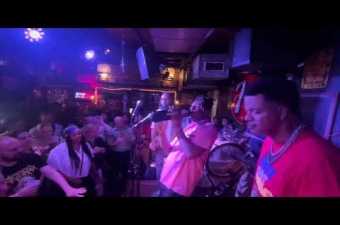
The Soul Rebels live at Le Bon Temps with Jon Batiste ca. 2023.
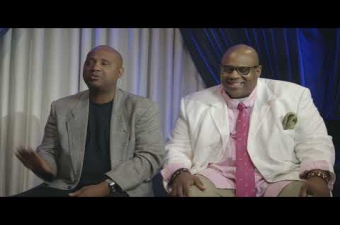
Lumar LeBlanc and Derrick Moss speak to Nelson George about building on the foundation of traditional New Orleans music.
Video by Nelson George.
Lumar LeBlanc and Derrick Moss speak to Nelson George about building on the foundation of traditional New Orleans music.
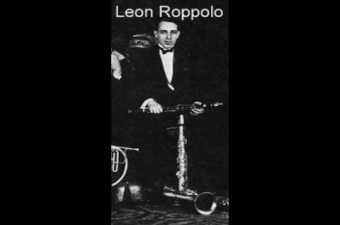
"Leon Roppolo: Sicilian-American Clarinetist Among The Pioneers Of The Jazz Solo," including one of his recordings with Jelly Roll Morton.
Video by carlo simonettic.
"Leon Roppolo: Sicilian-American Clarinetist Among The Pioneers Of The Jazz Solo," including one of his recordings with Jelly Roll Morton.
Images